CadXpert 3D printing guide

A comprehensive guide to
3D printing services at CadXpert

How to select technology and material according to properties?

Select the type of material you are interested in, and underneath you will see boxes with the specific name of the material by printing technology. This will make it easier for you to choose the technology and the material that goes with it.

Select material type:

SLM

Expand

What are the characteristics of 3D printing technologies?

3D printing is several families of technologies with completely different assumptions. The different workflow and print characteristics of each technology will make a difference in your choice of service.

The plastic printing technologies we use are FDM, SLA, SLS, PolyJet and SAF. See their brief characteristics and a comparison table.

Selection of technology by application

Select an application

Technology comparison

Read in the table what properties you will achieve with the technology.

SAF

Termin realizacji
as of 3 days
Najpopularniejsze materiały
PA12
Wymiary platformy
315 x 208 x 293 mm
Layer height
0.1 mm
Dokładność wymiarowa
▪️▪️▪️▫️▫️
Struktura powierzchni
Slightly rough
Post-processing
  • Dyeing
  • Smoothing
  • Varnishing
  • Installation of inserts
Rozmiar produkcji
  • low volume
  • medium-volume
  • high volume
Description
The most popular, cheapest and fastest 3D printing technology

SLS

Termin realizacji
as of 4 days
Najpopularniejsze materiały
PA12 , TPU 90A , PA-GF
Wymiary platformy
630 x 330 x 550 mm
Layer height
0.12 mm
Dokładność wymiarowa
▪️▪️▪️▫️▫️
Struktura powierzchni
Slightly rough
Post-processing
  • Dyeing
  • Smoothing
  • Varnishing
  • Installation of inserts
Rozmiar produkcji
  • low volume
  • medium-volume
  • high volume
Description
Durable parts, wide range of materials

FDM

Termin realizacji
as of 3 days
Najpopularniejsze materiały
ABS M30 , ASA , ULTEM , ESD
Wymiary platformy
1000 x 610 x 610 mm
Layer height
0.178-0.33 mm
Dokładność wymiarowa
▪️▪️▪️▫️▫️
Struktura powierzchni
Layered
Post-processing
  • Smoothing
  • Varnishing
  • Installation of inserts
  • Impregnation
Rozmiar produkcji
  • low volume
  • medium-volume
  • high volume
Description
Large size printing, wide selection of materials, high dimensional accuracy

SLA

Termin realizacji
as of 3 days
Najpopularniejsze materiały
Standard , Clear Resin , Tough 2000
Wymiary platformy
353 x 196 x 350 mm
Layer height
0.025- 0.1 mm
Dokładność wymiarowa
▪️▪️▪️▪️▫️
Struktura powierzchni
Smooth
Post-processing
  • Polishing
  • Varnishing
  • Installation of inserts
Rozmiar produkcji
  • low volume
  • medium-volume
  • high volume
Description
High detail reproduction, wide choice of materials

PolyJet

Termin realizacji
as of 2 days
Najpopularniejsze materiały
VERO , PP-like , Elastico
Wymiary platformy
1174 cm2
Layer height
0.019 mm
Dokładność wymiarowa
▪️▪️▪️▪️▪️
Struktura powierzchni
Smooth
Post-processing
  • Polishing
  • Varnishing
Rozmiar produkcji
  • low volume
  • medium-volume
  • high volume
Description
Multicolor and multi-material prints with high dimensional accuracy

Metal 3D printing

Termin realizacji
as of 7 days
Najpopularniejsze materiały
AlSi10Mg , SS 316L
Wymiary platformy
up to 500 x 280 x 345 mm
Layer height
0.1 mm
Dokładność wymiarowa
▪️▪️▪️▪️▫️
Struktura powierzchni
Slightly rough
Post-processing
  • Polishing
  • CNC machining
Rozmiar produkcji
  • low volume
  • medium-volume
  • high volume
Description
Allows production of parts with complex geometries in a single process

3D printing guide

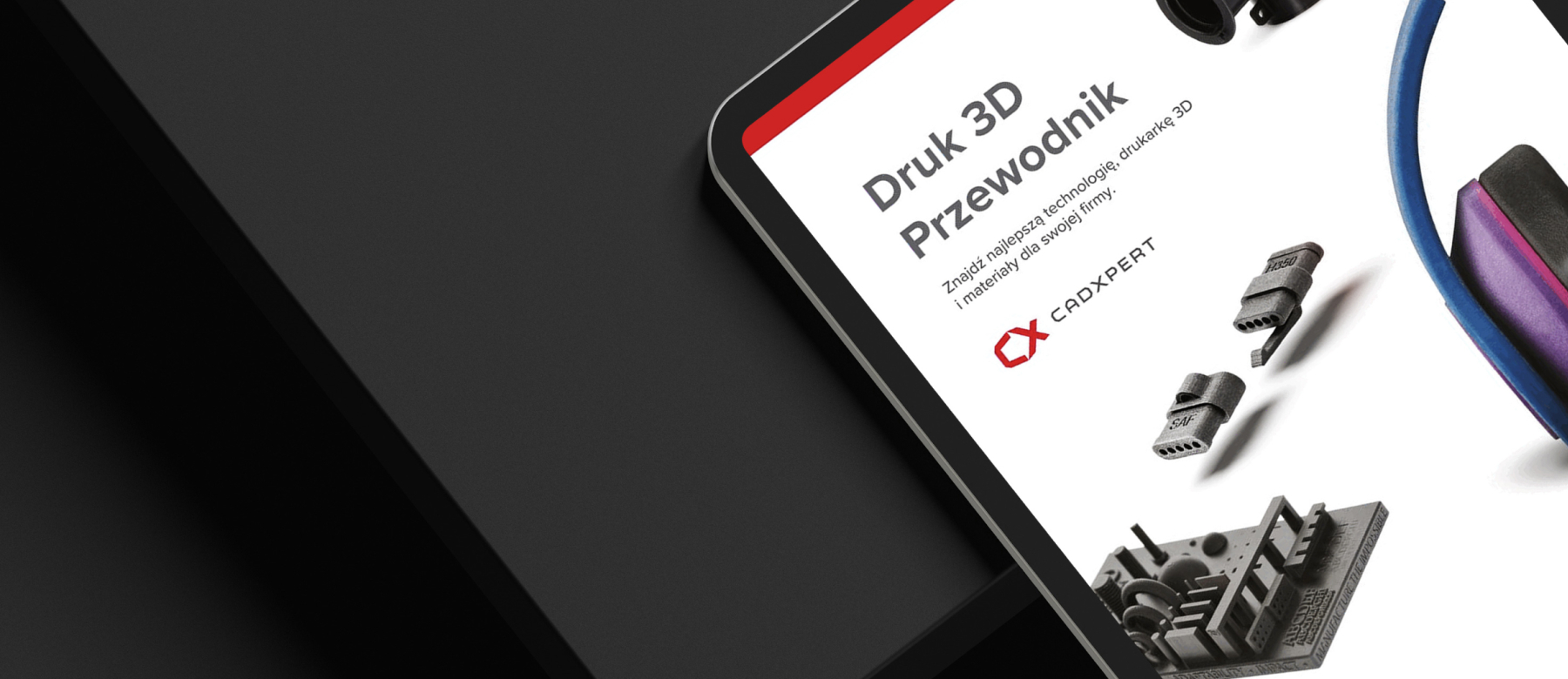
We know that our customers need a better understanding of what incremental manufacturing technologies are before deciding to outsource service printing.

With this in mind, we have created a “Guide to 3D Printing” to help you figure out the basics of 3D printing. It’s 40 pages of practical information and help for decision makers at our customers. You’ll learn about technologies, applications and materials so that it’s easier to choose solutions tailored to your case.

What do I find in the guide?

  • The answer to what 3D printing is
  • Descriptions of 3D printing technologies (FDM, PolyJet, SLA, SLS)
  • Help on how to choose the right technology
  • Help on how to choose the right material for your application

    Description of the technology

    FDM technology

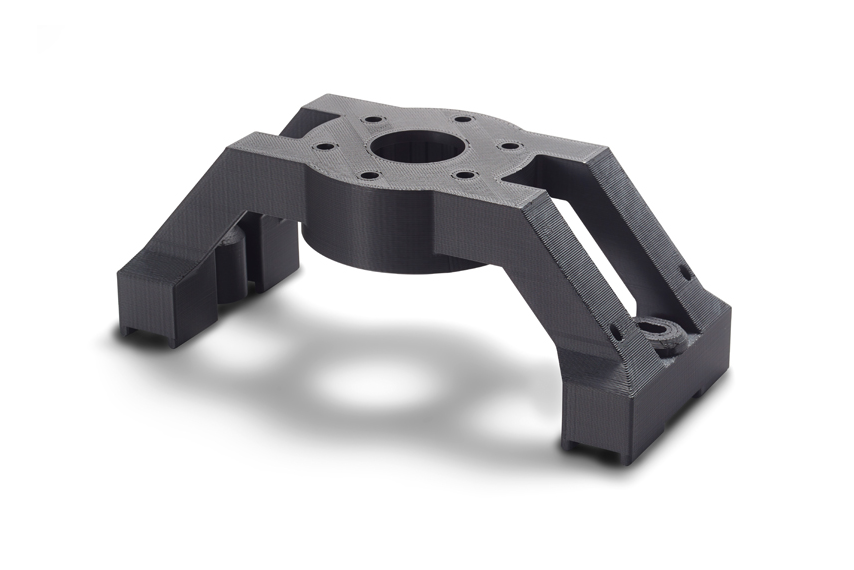
    In FDM (Fused Deposition Modeling), workpieces are created by supplying plastic in the form of a filament to the print head and heating it to a semi-fluid state. The print head applies the material on the work table, marking the shape of a single layer. Subsequent layers are applied when the head is raised or the work table is lowered. The semi-fluid plastic bonds when exposed to heat and quickly solidifies to form a uniform structure.

    Advantages

    • Speed of execution of low-volume orders
    • wide range of materials
    • the possibility of using different levels of filling
    • soluble support material
    • dimensional repeatability

    Disadvantages

    • layered surface of elements
    • minimum wall thickness 1mm

    Applications

    • industry
    • large size
    • prototyping
    • low volume production
    • prints with good mechanical and thermal properties
    • tools and fixtures

    Industries

    Production
    Industry
    Defense
    Automotive
    Aerospace
    Railroad
    Education

    PolyJet technology

    Polyjet technology uses liquid photopolymer resins cured layer by layer with UV light. The operation of a 3D printer here looks similar to that of large-format 2D printers. Piezoelectric heads apply a layer of liquid material to the work table, after which each layer is automatically exposed to the head with UV light. After curing, another layer of resin is applied.

    Advantages

    • high precision
    • multi-material prints
    • color prints
    • multicomponent prints
    • tightness of prints

    Disadvantages

    • limited heat resistance
    • demanding postprocessing
    • susceptibility to UV radiation

    Applications

    • medical devices (biocompatible)
    • anatomical prints
    • complex prints requiring a variety of materials and colors
    • realistic prototypes
    • transparent elements

    Industries

    Medicine
    Dentistry
    HOME APPLIANCES
    Design

    SLA technology

    In SLA (stereolithography), details are created from light-curing resins, cured by exposure to a laser beam. Resin is poured into a container, in which the work table is immersed. The laser beam “draws” the shape of the object in the XY plane, polymerizing the resin. The resin adheres to the surface of the work table, after which it is raised to the height of the next layer and the process repeats – this time the new layer adheres to the previously cured one.

    Advantages

    • smoothness of the surface
    • wide range of materials
    • biocompatible materials
    • tightness of prints

    Disadvantages

    • complex finishing
    • susceptibility to UV radiation

    Applications

    • small precision parts
    • low volume production
    • prints from biocompatible materials
    • medical devices

    Industries

    Medicine
    Foundry
    HOME APPLIANCES
    Automotive
    Jewelry

    SLS technology

    SLS (Selective Laser Sintering) involves sintering a powdered material layer by layer using a focused laser beam. The laser, operating in the far-infrared band, is guided by an optical system to precisely fuse the material particles together. Once the layer is fused, the work table lowers by the height of the applied layer, and the printer’s knife or roller applies the unsintered material to build the next layer. The cycle repeats until a full-size model is achieved.

    Advantages

    • serial production of components
    • ease of creating complex geometries without lengthy post-processing
    • material strength
    • no waste

    Disadvantages

    • time-consuming process of replacing materials
    • The need to prepare a workstation/room to work with a printer

    Applications

    • medium-volume production of components
    • enclosures
    • geometrically complex models

    Industries

    HOME APPLIANCES
    Automotive
    Orthopedics
    Production
    Industry
    Prototyping
    Defense
    Transport

    SAF Technology

    SAF (Selective Absorption Fusion) is a polyamide powder 3D printing technology developed by Stratasys. It is based on powder technology, but uses a sprayed binder and thermal energy instead of a laser beam. Piezoelectric heads precisely spray a special HAF liquid that binds the material particles. The action of the liquid causes the powder particles to reach their melting point, allowing them to bind into a cohesive layer. Another layer of powder is then spread and the process repeats.

    Advantages

    • printing precision (+/- 0.1 mm)
    • Printing speed (full working chamber in 12h)
    • material saving (recycling)
    • physical and temperature durability of prints

    Disadvantages

    • narrow range of materials

    Applications

    • industry
    • precision printing
    • printing of larger quantities of elements

    Industries

    HOME APPLIANCES
    Automotive
    Orthopedics
    Production
    Industry
    Prototyping
    Defense
    Transport

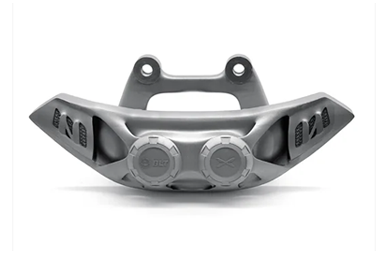
    DMLS and SLM technology
    – printing from metal

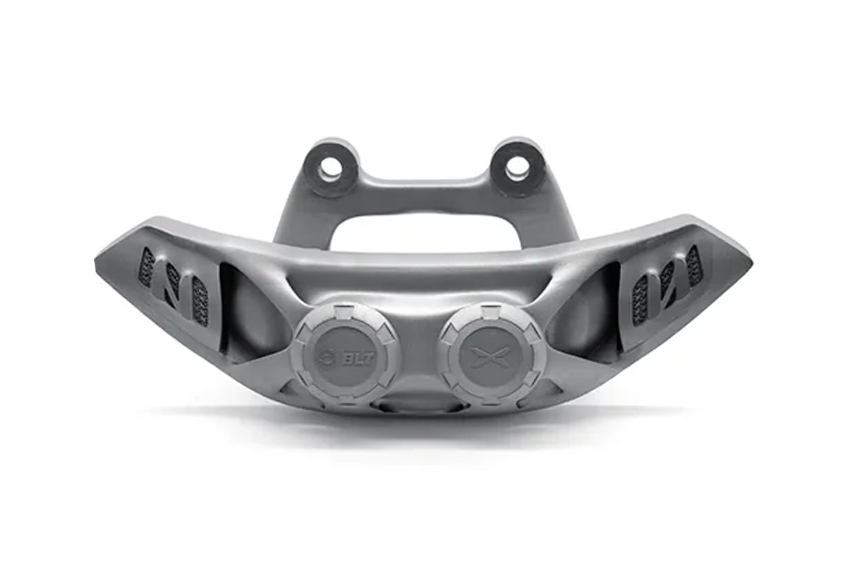
    In DMLS and SLM metal 3D printers, the main factor is the laser, which is responsible for melting and sintering layers of metal powder. The laser beam is directed at a thin layer of metal powder, which is sintered so that a finished part is produced in the working chamber.

    The process uses supports that, in addition to preventing distortion, also serve as a heat sink to ensure as uniform cooling as possible. This ensures that nowhere on the component will appear prone to mechanical stress.

    Advantages

    • topology optimization
    • material saving (recycling)
    • mechanical and temperature durability of prints

    Disadvantages

    • limited size of the printer's working chamber
    • lead time 2-3 weeks
    • relatively high entry threshold

    Applications

    • industry
    • durable elements

    Industries

    Production
    Industry
    Automotive
    Defense

    Consult 3D printing services

    1
    2

    What questions will help you assess your situation?

    1. 1

      Do you have a finished file/technical drawing of the part?

    2. 2

      What kind of environment will the components operate in and will they be exposed to UV radiation?

    3. 3

      In what temperature range will the component operate?

    4. 4

      Will the details be exposed to chemical liquids, oils?

    5. 5

      Will the item be subjected to any load, if so, what kind?

    6. 6

      Does the print require; surface smoothing, varnishing, threaded inserts, polishing?

    7. 7

      Is certification required?
      – non-flammability
      – for food contact
      – biocompatibility

    Submit the form, our consultant will contact you within 30 minutes

    Konsultant duku 3D

        Direct contact