

3D printing technologies and their properties
FDM technology
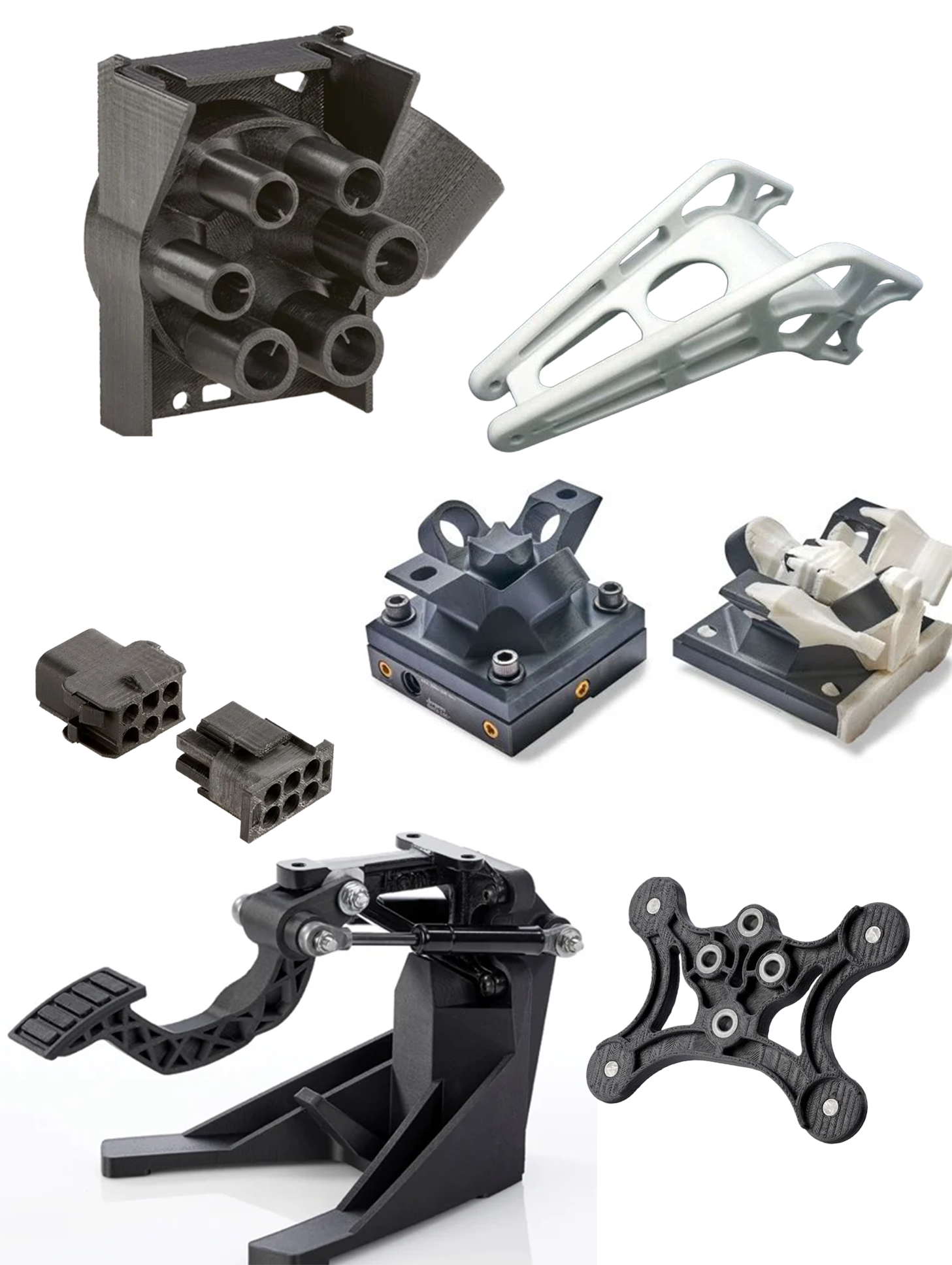
In FDM (Fused Deposition Modeling), workpieces are created by supplying plastic in the form of a filament to the print head and heating it to a semi-fluid state. The print head applies the material on the work table, marking the shape of a single layer. Subsequent layers are applied when the head is raised or the work table is lowered. The semi-fluid plastic bonds when exposed to heat and quickly solidifies to form a uniform structure.
What sets our FDM technology printers apart?
Stratasys FDM printers are distinguished by certain manufacturing technologies (servo drives with encoder), process stability (closed material containers) and print repeatability (avoid many printing defects). The use of temperature control systems, closed working chambers and dedicated structural and support materials allows printing parts with very good mechanical properties, with greater certainty. The equipment is designed for continuous operation, making it suitable for both prototyping and low-volume production.
Why use FDM technology in industry?
FDM technology enables the production of functional parts without the need for injection molds (long lead time, cost). It allows rapid production of prototypes, tooling and final parts with high mechanical strength and chemical resistance. Thanks to the wide range of available engineered materials, FDM is used in many industries, reducing product implementation time and production costs.
Advantages
- Speed of execution of low-volume orders
- wide range of materials
- the possibility of using different levels of filling
- soluble support material
- dimensional repeatability
Disadvantages
- layered surface of elements
- minimum wall thickness 1mm
Applications
- industry
- large size
- prototyping
- low volume production
- prints with good mechanical and thermal properties
- tools and fixtures
Industries


What do you gain by choosing FDM printers in the following price ranges?
| Parameter | Printers 10-100 thousand PLN | Printers 100-500 thousand PLN | Printers over 500 thousand PLN |
| Build chamber size | ◼️◻️◻️◻️ | ◼️◼️◻️◻️ | ◼️◼️◼️◼️ |
| Variety of materials | ◼️◼️◻️◻️ | ◼️◼️◻️◻️ | ◼️◼️◼️◼️ |
| Precision | ◼️◻️◻️◻️ | ◼️◼️◼️◻️ | ◼️◼️◼️◼️ |
| Heated working chamber | ❌ (not always) | ✅ | ✅ |
| Soluble support material | ❌ (not always) | ✅ | ✅ |
SLA technology
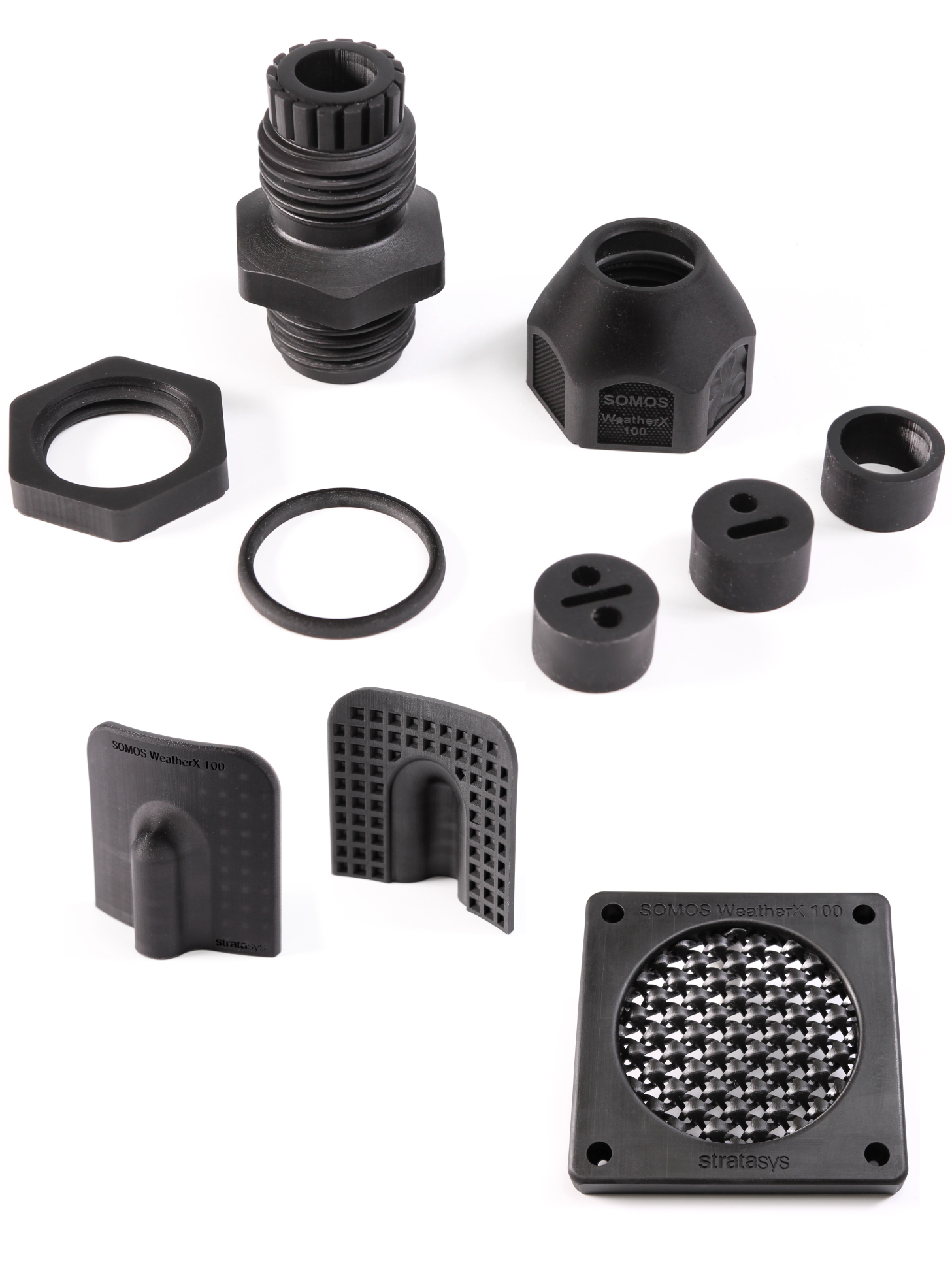
In SLA (stereolithography), details are created from light-curing resins, cured by exposure to a laser beam. Resin is poured into a container, in which the work table is immersed. The laser beam “draws” the shape of the object in the XY plane, polymerizing the resin. The resin adheres to the surface of the work table, after which it is raised to the height of the next layer and the process repeats – this time the new layer adheres to the previously cured one.
What sets resin mSLA and DLP printers apart?
The mSLA and DLP printers we offer are distinguished by very high detail accuracy and smooth print surfaces. The use of precision exposure systems (for sub-pixel resolution) and dedicated engineering resins will allow you to print the kind of parts that will fit the demand. Formlabs devices provide control of process parameters through refined software. They also give you repeatability and speed, making them suitable for professional and production applications.
Why use mSLA/DLP technology in industry?
The mSLA and DLP technologies enable the rapid production of high-precision parts with smooth surfaces without the need for additional machining. They work especially well in the production of visual prototypes and functional components. A wide range of specialized resins allows you to achieve mechanical, thermal and chemical properties tailored to industrial applications. This technology will help you reduce product development time and increase production flexibility.
Advantages
- smoothness of the surface
- wide range of materials
- biocompatible materials
- tightness of prints
Disadvantages
- complex finishing
- susceptibility to UV radiation
Applications
- small precision parts
- low volume production
- prints from biocompatible materials
- Medical devices
Industries


PolyJet technology
Polyjet technology uses liquid photopolymer resins cured layer by layer with UV light. The operation of a 3D printer here looks similar to that of large-format 2D printers. Piezoelectric heads apply a layer of liquid material to the work table, after which each layer is automatically exposed to the head with UV light. After curing, another layer of resin is applied.
What sets Stratasys’ PolyJet technology printers apart?
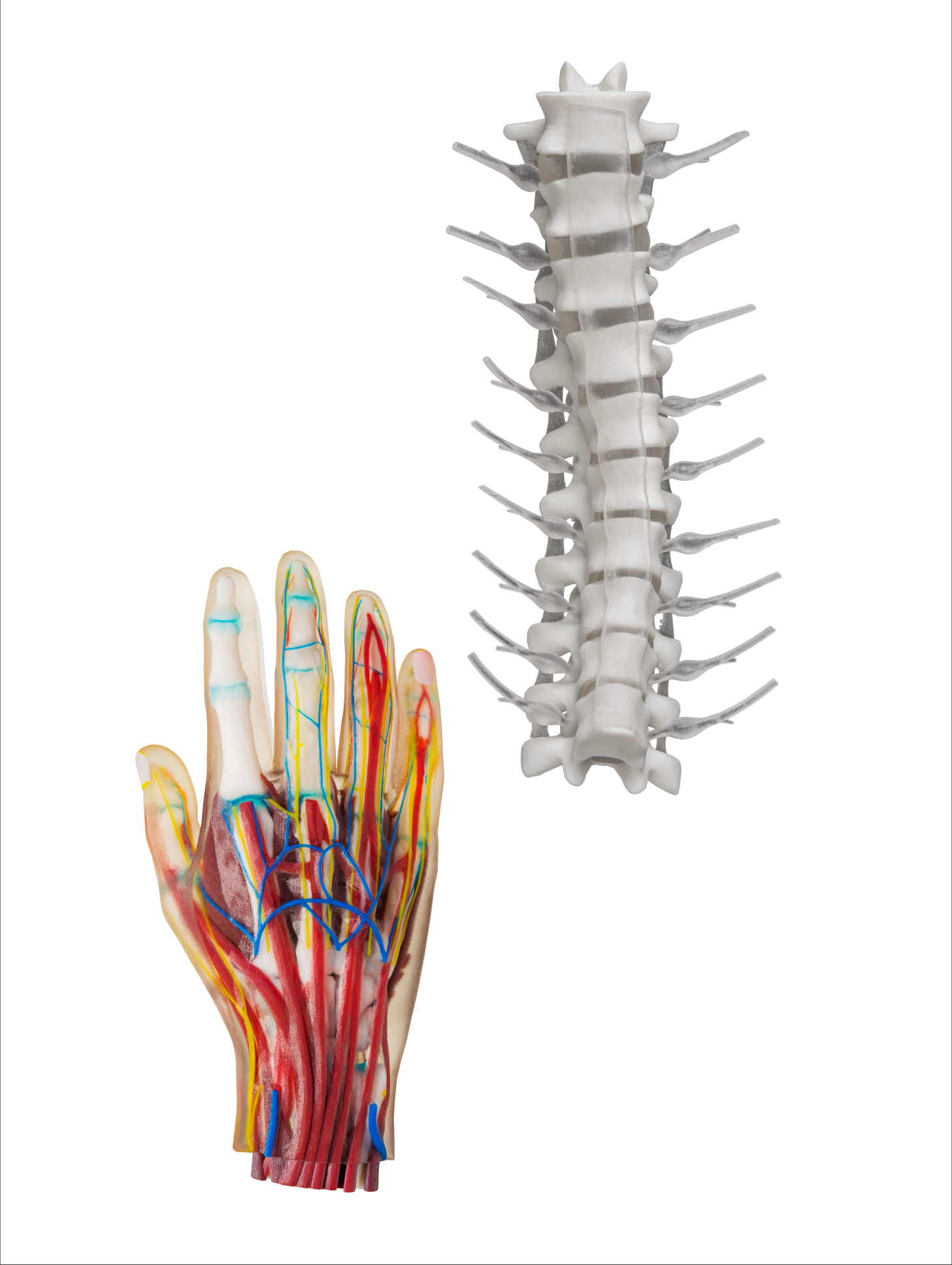
Stratasys’ PolyJet printers are distinguished by their ability to simultaneously print from multiple materials and combine different properties in a single model. The technology produces very smooth surfaces, high dimensional accuracy and excellent realism. Thanks to the precise application of photopolymer droplets and instantaneous curing with UV light, PolyJet devices make it possible to create parts of varying hardness, flexibility and color in a single printing process.
Why use PolyJet technology in industry?
PolyJet technology works well in the creation of visual and functional prototypes, where appearance, accuracy and realistic reproduction of the final product are crucial. It enables rapid production of conceptual models, assembly parts and test pieces without the need for expensive tooling. With the ability to simulate the properties of end materials, PolyJet significantly shortens the design process and supports decision-making at an early stage of product development.
Advantages
- high precision
- multi-material prints
- color prints
- multicomponent prints
- tightness of prints
Disadvantages
- limited heat resistance
- demanding postprocessing
- susceptibility to UV radiation
Applications
- medical devices (biocompatible)
- anatomical prints
- complex prints requiring a variety of materials and colors
- realistic prototypes
- transparent elements
Industries


SLS technology
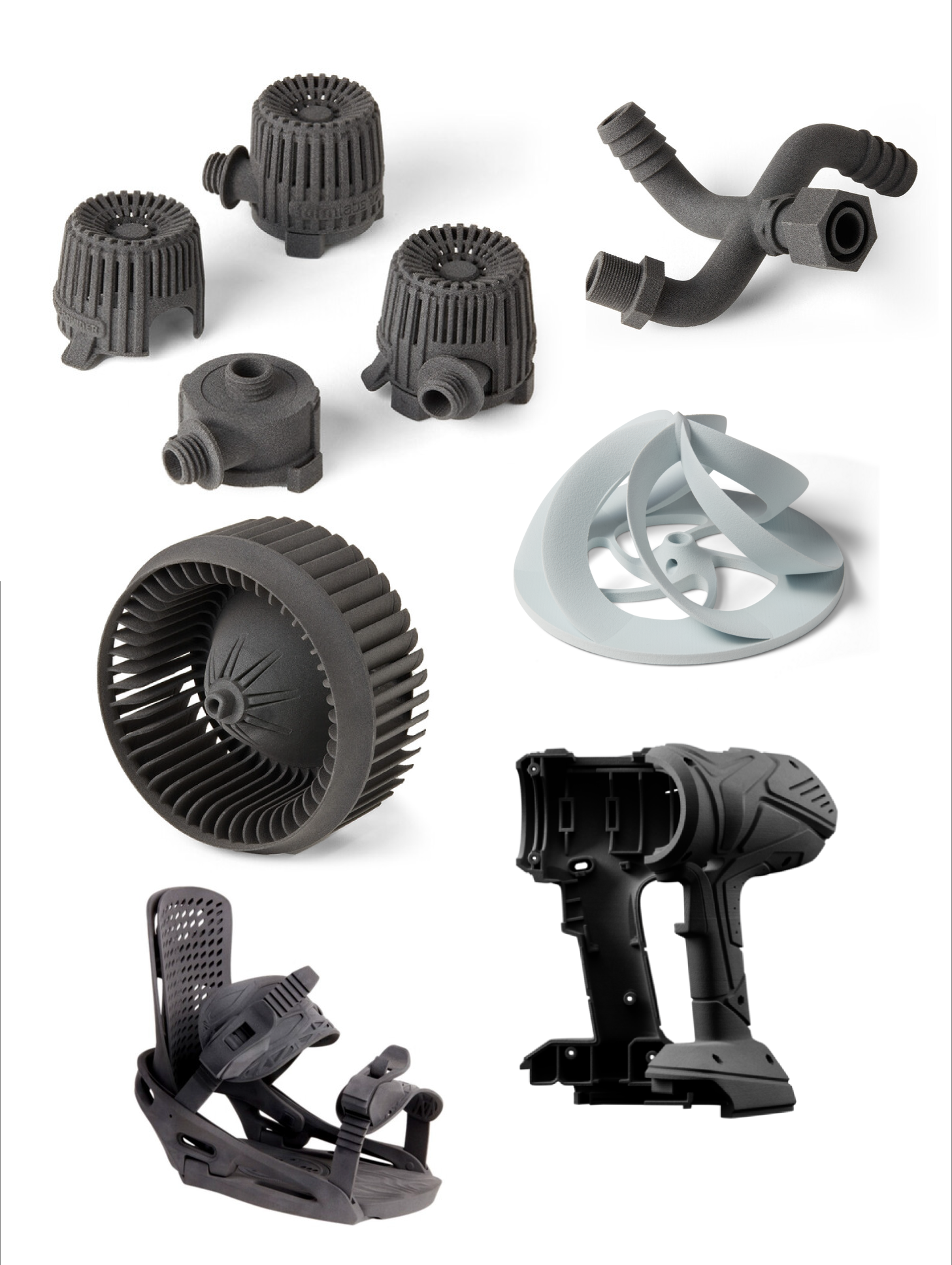
SLS (Selective Laser Sintering) involves sintering a powdered material layer by layer using a focused laser beam. The laser, operating in the far-infrared band, is guided by an optical system to precisely fuse the material particles together. Once the layer is fused, the work table lowers by the height of the applied layer, and the printer’s knife or roller applies the unsintered material to build the next layer. The cycle repeats until a full-size model is achieved.
What sets Formlabs’ SLS printers apart?
Formlabs’ SLS printers, such as Fuse 1+ 30W, are distinguished by their high reliability. They provide the ability to produce robust parts with complex geometries, and are practical for low batches of small parts. The use of precise and powerful laser systems and a controlled working environment (e.g., shielding gas) makes it possible to produce parts with a homogeneous structure and good mechanical properties. The lack of the need for supports enables free design and efficient use of the working space.
Why use SLS technology in industry?
SLS technology enables the production of durable, functional parts with smooth surfaces without the need for additional tooling and with minimal post-processing. It is ideal for the production of final components and short to medium production runs. Thanks to their high mechanical strength and resistance to temperature and chemicals (materials like PA-12, PA-11 and PP), SLS printed parts are widely used in the automotive, aerospace and engineering industries.
Advantages
- serial production of components
- ease of creating complex geometries without lengthy post-processing
- material strength
- no waste
Disadvantages
- time-consuming process of replacing materials
- The need to prepare a workstation/room to work with a printer
Applications
- medium-volume production of components
- enclosures
- geometrically complex models
Industries


Formlabs Fuse 1+ 30W | Fuse Sift and Fuse Blast peripherals
SAF Technology
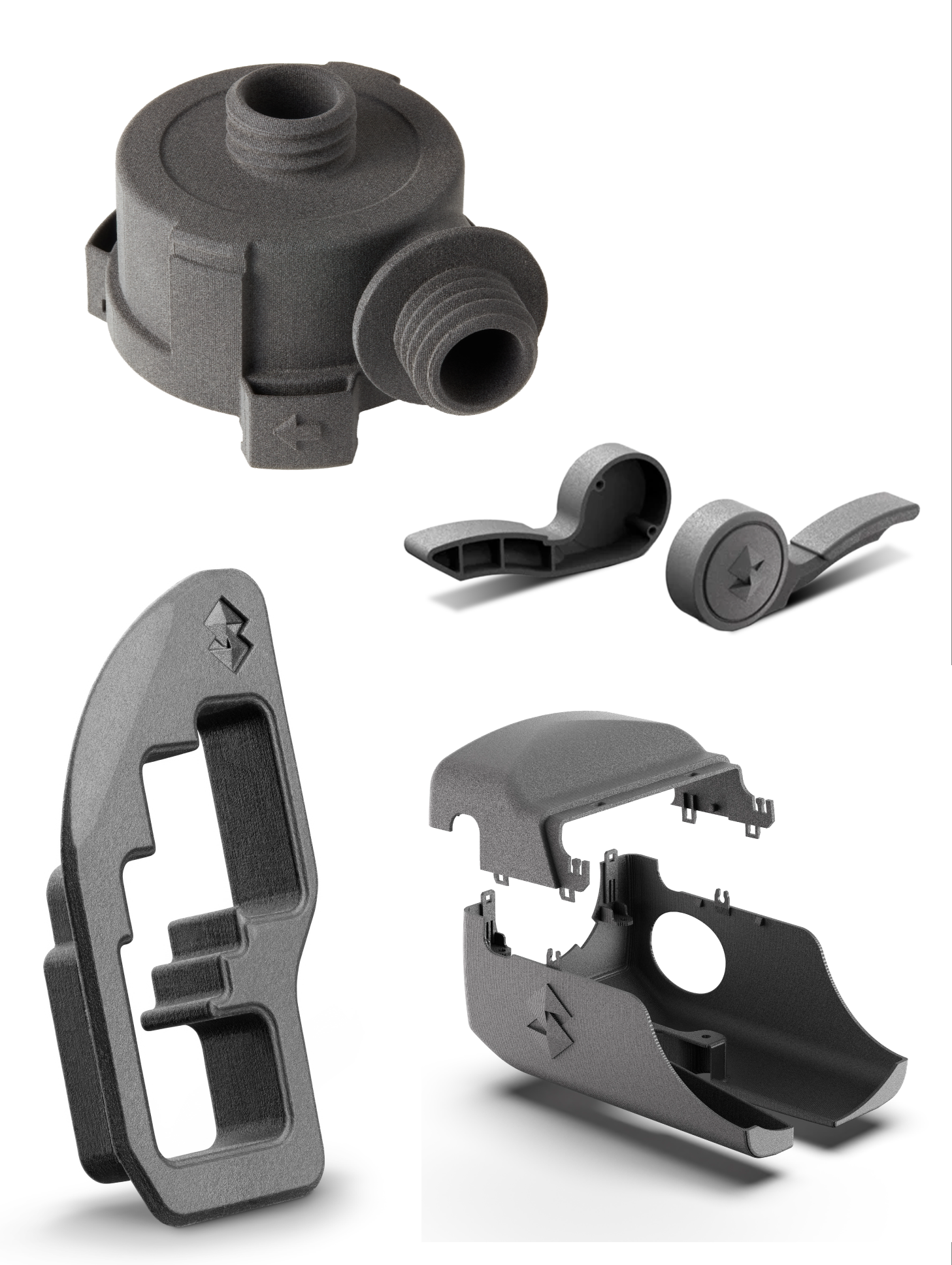
SAF (Selective Absorption Fusion) is a polyamide powder 3D printing technology developed by Stratasys. It is based on powder technology, but uses a sprayed binder and thermal energy instead of a laser beam. Piezoelectric heads precisely spray a special HAF liquid that binds the material particles. The action of the liquid causes the powder particles to reach their melting point, allowing them to bind into a cohesive layer. Another layer of powder is then spread and the process repeats.
What sets the Stratasys H350 apart with SAF technology?
Stratasys H350 with SAF technology is distinguished by its high process-repeatability and batch production stability. The use of piezoelectric heads for precise application of HAF liquids and a uniform source of thermal energy makes it possible to obtain homogeneous parts with very good mechanical properties from materials such as PA-12 and PP. SAF technology is designed for efficient printing of large batches of parts (large Build chamber) while maintaining consistent quality throughout the working area.
Why use SAF technology in industry?
SAF technology enables cost-effective production of final parts in medium and large batches. It ensures high dimensional accuracy, repeatability and good mechanical properties of parts without the need for supports. SAF works well in the production of utility components, housings or assembly parts. The readily available serialization reduces lead time and lowers the unit cost of producing a component.
Advantages
- printing precision (+/- 0.1 mm)
- Printing speed (full working chamber in 12h)
- material saving (recycling)
- physical and temperature durability of prints
Disadvantages
- narrow range of materials
Applications
- industry
- precision printing
- printing of larger quantities of elements
Industries
Stratasys H350 with SAF technology
DMLS and SLM technology
– metal printing
In DMLS and SLM metal 3D printers, the main factor is the laser, which is responsible for melting and sintering layers of metal powder. The laser beam is directed at a thin layer of metal powder, which is sintered so that a finished part is produced in the working chamber.
The process uses supports that, in addition to preventing distortion, also serve as a heat sink to ensure as uniform cooling as possible. This ensures that nowhere on the component will appear prone to mechanical stress.
What distinguishes BLT printers using SLM technology?
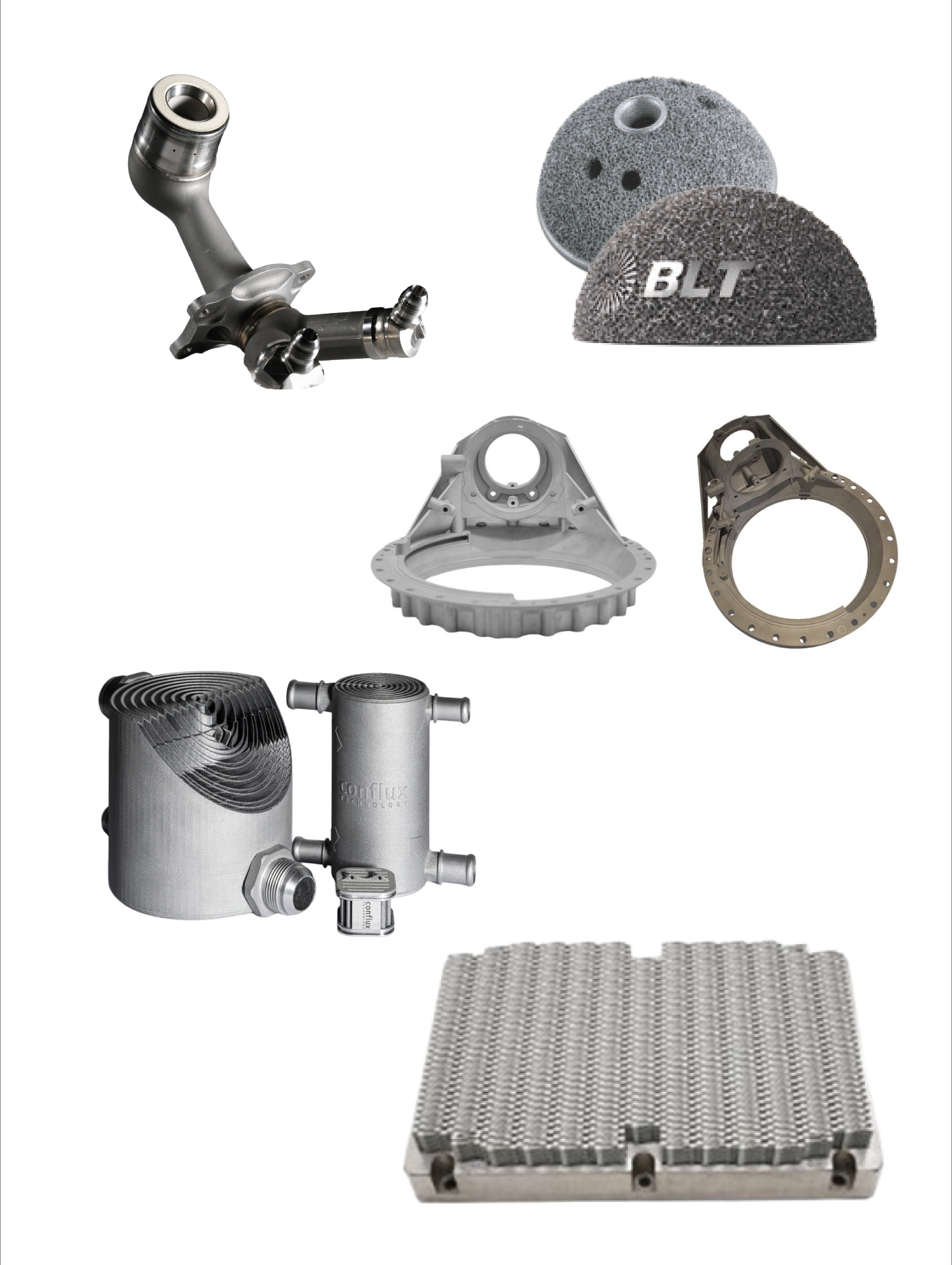
BLT’s SLM printers are distinguished by their design specifically for industrial production and their ability to print from a wide range of metal powders. Stable machine design, controlled working atmosphere and advanced process monitoring systems ensure repeatability and safety in production or prototyping.
Why use SLM technology in industry?
SLM technology makes it possible to produce all-metal parts with very high mechanical strength and better functional properties than polymers. It allows the production of parts with complex geometries, impossible to manufacture with traditional methods like CNC machining. SLM is used in the aerospace, energy, automotive and medical industries. It shortens the supply chain, reduces the number of components (no welding) and allows rapid implementation of new design solutions.
Advantages
- topology optimization
- material saving (recycling)
- mechanical and temperature durability of prints
Disadvantages
- limited size of the printer's working chamber
- lead time 2-3 weeks
- relatively high entry threshold
Applications
- industry
- durable elements
Industries