

3D Printers
We have ranked the 3D printers in our offer so that you can easily find the right model for your needs. We present three price categories, within which we distinguish printers of particular technologies.
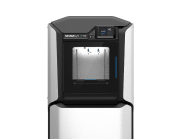
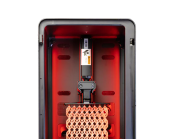
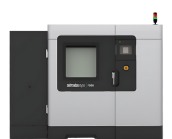
3D printers – professional devices for various industries
Additive technology has revolutionized the way we design, prototype and manufacture. In our offer you will find devices that meet the needs of both small workshops and large industrial plants. 3D printers are perfect for engineering, medicine, dentistry or education – wherever precision, flexibility and speed are important. With a variety of technologies – FDM, SLA, DLP, SLS – you can choose the equipment for your specific application and material.
Printers 10 000 – 100 000 PLN
Purpose
- Prototyping
- Rapid design
- Small industry
- High volume production
- Serial production
- Education
- Dental
- Medicine
- Large format
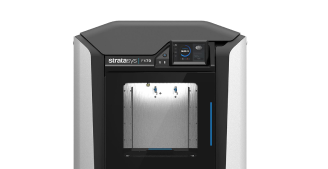
FDM (filament)
- Durable components
- Cheap printing
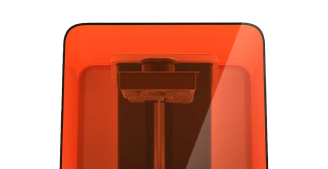
SLA, LFS, LFD, DLP (resin)
- Good surface quality
- Transparent materials
- Dental versions available
Printers 100 000 – 500 000 PLN
Purpose
- Bioprinting
- Education
- Rapid design
- Small industry
- Dental
- Medicine
- High volume production
- Serial production
- Big industry
- Large format
FDM (filament)
- Durable components
- Cheap printing
- High repeatability of printing
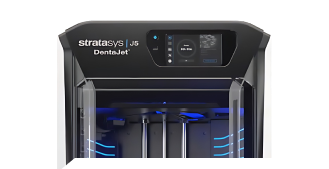
PolyJet
- Multi-color printing
- Multi-material printing
- Washable supports
- Medical and Dental Versions Available
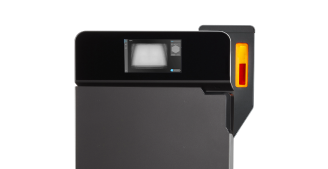
SLS and SAF (powder)
- Batch production
- Low-cost manufacturing
- Durable components
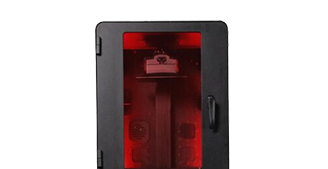
SLA, LFS, LFD, DLP (resin)
- Smooth finish
- Wide range of applications
- Print speed
- Use of photopolymers
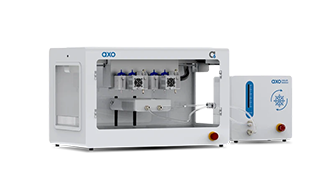
Bioprinting
- Universities and research
- Biomaterials
- Electrospinning and electrowriting
- AxoSuite Software
Printers over 500 000 PLN
Purpose
- Big industry
- High volume production
- Large format
- Serial production
- Rapid design
- Medicine
- Dental
- Small industry
- Education
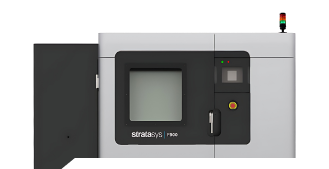
FDM (filament)
- Most advanced materials
- Durable components
- Largest working fields
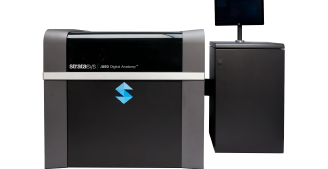
PolyJet
- Larger working area
- Multiple print colors
- Combining print materials
- Medical versions available
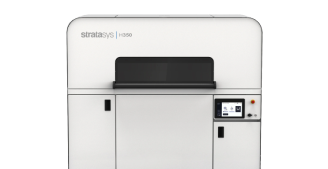
SLS and SAF (powder)
- Batch production
- Very fast printing
- Dimensional accuracy
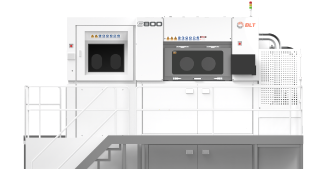
SLM (metal)
- Very durable components
- Thermal resistant elements
- Part geometries not achievable in CNC, casting
- Dental versions available
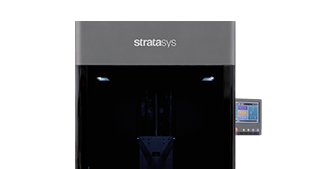
SLA, LFS, LFD, DLP (resin)
- Smooth finish
- Wide range of applications
- Print speed
- Use of photopolymers
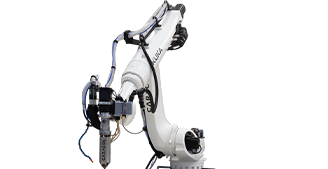
Caracol
- Durable components
- Biggest size in 3D printing
- Robot arm with extruder
- Use of granules
3D printer for companies – how to choose a device tailored to the needs of a particular industry?
Choosing a 3D printer for businesses starts with determining the application: prototyping, mass production, functional parts or tooling components. Determine requirements for part dimensions, repeatability, accuracy and type of materials. Also check compatibility with the CAD/CAM systems in use. For companies that don’t want to invest in a production 3D printer right away, an alternative is to use a 3D printing service or test solutions on smaller, professional 3D printers before scaling up.
Industrial 3D printer – key features and specifications
When choosing an industrial 3D printer, pay attention to: working field, resolution and dimensional repeatability, printing speed, compatible materials (engineering plastics, composites, metals), surface preparation and processing systems, and safety requirements. The most important technical parameters are:
- maximum print size,
- layer thickness,
- dimensional tolerances,
- environmental requirements (temperature, filtration).
Professional 3D printer – materials, compatibility and industry applications
The professional 3D printer supports a wide range of materials: PLA/ABS for simpler applications, PA, PET, TPU and glass or carbon fiber reinforced materials for mechanical parts, and SLA resins with different properties for precision parts. File compatibility (CAD/STL/AMF formats), integration with quality control software, and the ability to automate preparation and post-processing processes are important. Meanwhile, typical industries using professional 3D printers are:
- automotive industry,
- aviation,
- medical,
- production of final parts.
Large 3D printer – advantages and limitations
The large 3D printer makes it possible to produce larger-sized parts without the need to join parts together, reducing the risk of weakening the structure and reducing assembly time. Advantages include time savings in the production of individual large parts and the ability to realize prototype and production projects that previously required cutting and gluing. Limitations include higher investment costs, greater space and logistical needs, and the need for appropriate conditions (substrate stability, temperature, ventilation).
Production 3D printer – operating costs and integration into the production line
Evaluating the appropriateness of buying a production 3D printer should include the total cost of ownership: the price of the machine, the cost of materials, service, energy and operator time. Consider depreciation and expected productivity (number of parts per shift). Also remember that integration into a production line requires an automation plan, systems for quality control, material logistics and safety procedures. Production solutions often offer continuous operation options, automatic material feeders and integrated post-processing, which reduces unit costs for larger runs.
3D printer for businesses – recommendations and suggestions for use
The implementation of a 3D printer into a company is worth preceding with an analysis of production needs, testing of materials and piloting of the process.
- For companies focusing on prototyping, professional 3D printers with high resolution and a large selection of resins or filaments are recommended.
- For small batch production, industrial 3D printers with good repeatability and the ability to use engineered materials will be best.
- For mass production, consider a production 3D printer with automation and scaling options.
- If large parts are required – a large 3D printer with adequate logistics and space is a priority.
If you need help selecting a solution or a quote, schedule a free consultation with our team.