- From the article you will learn:
- Why consider 3D printing in manufacturing?
- Needs analysis - the first step of implementation
- Is 3D printing suitable for prototyping?
- Stages of 3D printing implementation
- Case Studies - real examples of implementation in production
- The most common mistakes when implementing 3D printing and how to avoid them
- Summary
- Contact 3D printing consultants

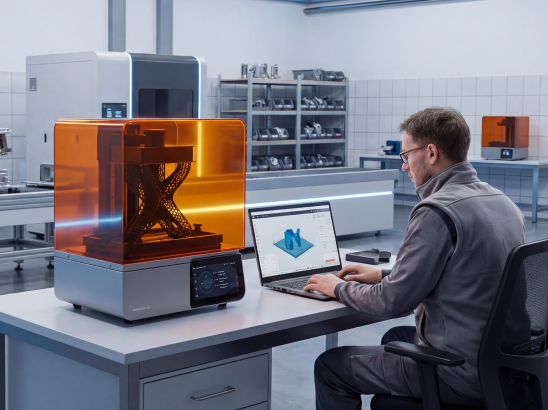
In one of our implementations, the customer had a few days to deliver assembly parts. Losses started to generate. 25,000 tubes for cosmetics were not going to leave on time. Instead of waiting for traditional manufacturing of the line components, we printed a series of eight precision components in a few days, which saved the deadlines. This is a model implementation of a 3D printing service.
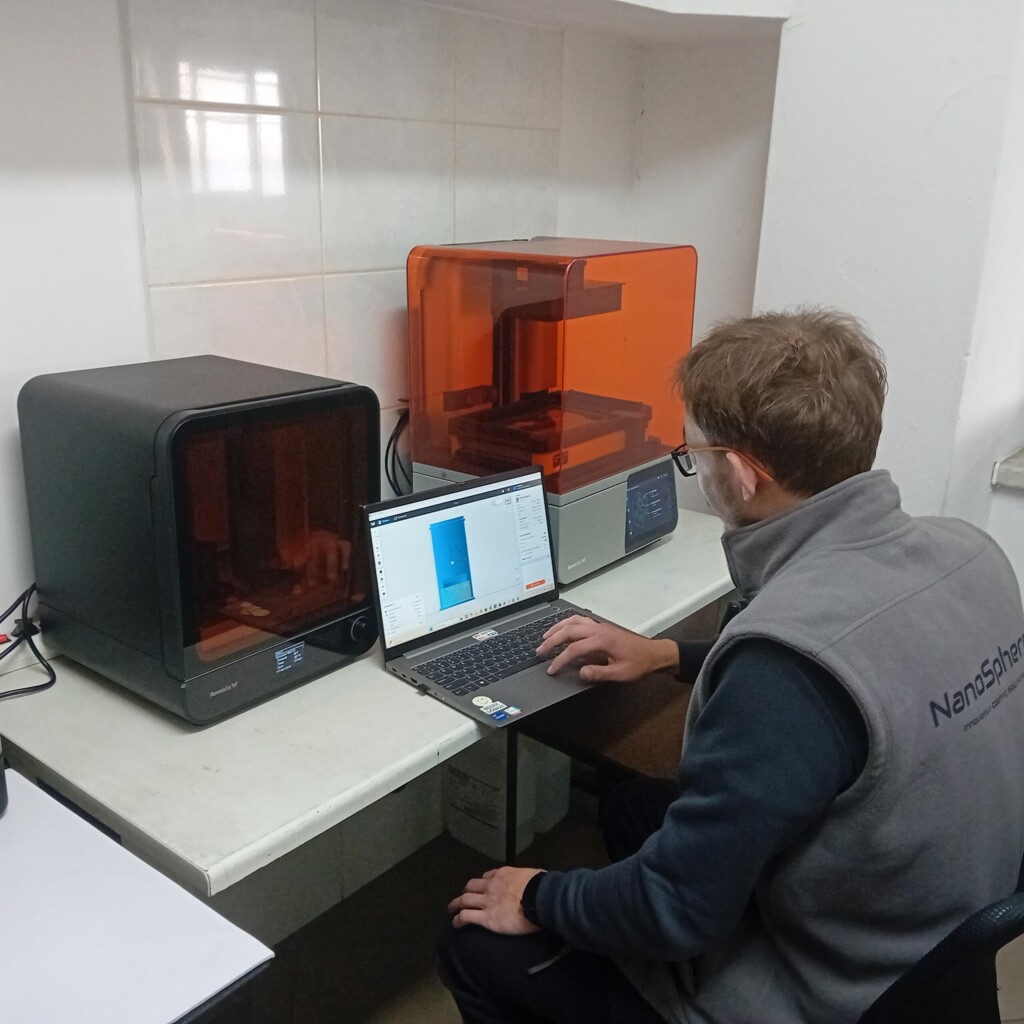
In another project, the NanoSphere team moved in-house prototyping of the masking covers to a Formlabs Form 4 3D printer and reduced the cycle from 6 to 4 weeks, testing 4-6 variants in parallel, without the risk of delays from outsourcing. This is a resin 3D printing implementation with a clear return on investment.
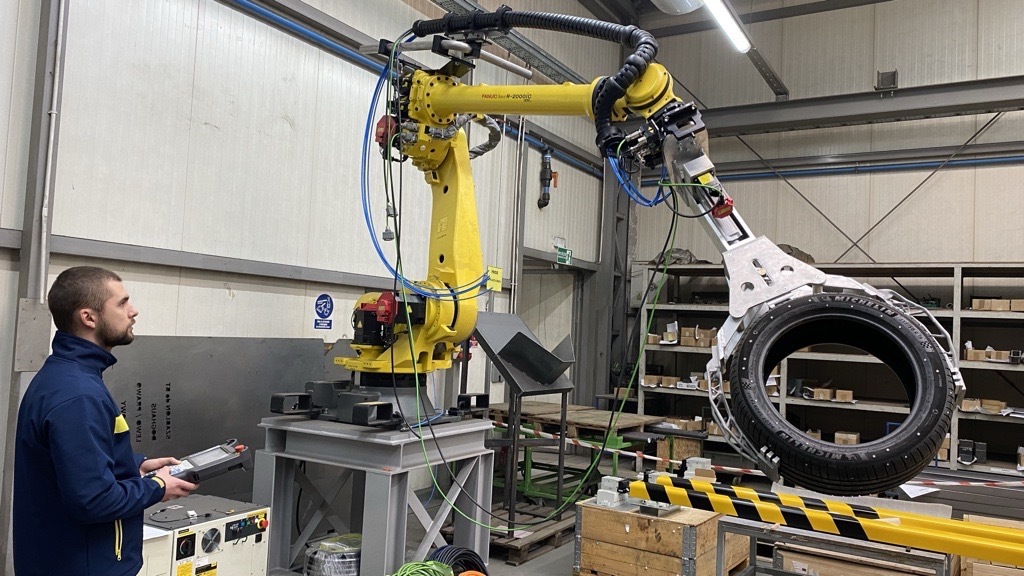
And further – when Michelin needed a tool that would not constrain the robotic arm by weight, it worked with CADXPERT to design and print a lightweight metal gripper to match the real-world loads in the application. Here we implemented a metal optimized solution.
Finally, Optopol Technology, developing diagnostic equipment, implemented SLS 3D printing (Formlabs Fuse 1+ 30W). Savings were generated by iterating thin-walled, complex geometries without waiting for further external orders.
These examples show that the implementation of 3D printing in a manufacturing plant usually starts not with a “printer,” but with a problem: an outage, a queue in the tool room, or a design iteration that is too slow. In this article, we dissect how to carry out such a process step by step. Keep reading and take a look at the case studies section to learn more about our implementations.
From the article you will learn:
- How 3D printing reduces prototyping time and gets products to market faster.
- How the process of implementing 3D printing in a manufacturing plant works.
- Is 3D printing suitable for prototyping and what technologies work best for it.
- About examples of 3D printer applications in real-world manufacturing plants.
- What to look for when planning your own 3D printing implementation.
Why consider 3D printing in manufacturing?
Many companies today face challenges: increasing product personalization, short runs, pressure to reduce costs and rapid design iterations. Traditional manufacturing methods often prove too slow or costly, especially for prototyping or low-volume production. 3D printing offers an alternative and allows the production of complex geometries without costly injection molds. AM (Additive Manufacturing), simply put, speeds up processes and gives a competitive advantage.
Needs analysis – the first step of implementation
Before you choose a 3D printer or 3D printing service, you will need an analysis of the technology’s applications in your facility. This is the point at which a 3D printing consultant asks:
- implementation goals (e.g., reducing prototyping time, small batch production or spare parts),
- technical and material requirements for prints,
- current production processes and their limitations – we identify pain-points,
- the expected business effect – we project savings in time and money.
This approach selects 3D printing technology and materials and is a field activity often involving the maintenance department.
Is 3D printing suitable for prototyping?
Yes – this is one of the most frequently asked questions in implementation consultations.
3D printing significantly shortens design and test cycles, enabling rapid production of functional or assembly prototypes. Different technologies offer different possibilities:
- FDM / FFF – fast and inexpensive conceptual prototypes and support tools.
- SLA / mSLA – high resolution and surface smoothness, ideal where geometric detail matters.
- SLS / SAF – unsupported printing, for functional prototypes and robust technical details, such as from Nylon 12.
Case in point: NanoSphere has deployed a Formlabs Form 4 printer, which has reduced the prototyping cycle of its camouflage covers from 6 to 4 weeks and can today test as many as 4-6 variants in parallel.
Stages of 3D printing implementation
In our practice, successful implementations do not start with the purchase of a device, but with an orderly decision-making process. Plants that go through all the steps methodically achieve stable results faster and avoid a situation in which the printer becomes an expensive addition to the machine park.
Evaluation of applications
The first step is to analyze real production problems and identify where additive technology will have a measurable effect. In our projects, CAD models, schedules, reasons for downtime and tool room costs are analyzed.
The most common applications in plants:
Prototyping of new products
Implementations at NanoSphere or Optopol Technology have shown that the greatest value is in the unkat technology’s capabilities and shortened design iterations.
3D printing makes it possible:
- Perform functional prototypes instead of just visual ones,
- Test several variants in parallel,
- make design changes overnight,
- eliminate delays resulting from outsourcing.
In practice, this means more control over product development and a shorter time-to-market.
Production of assembly tools and instruments
This is the area that, in many companies, gives the fastest return on investment.
Implementations for manufacturing companies (e.g., cosmetics or food industry) included:
- mounting sockets,
- positioning handles,
- guides and spacers,
- control instruments.
3D printing reduces lead times from weeks to days and allows tooling to be modified as the product changes. Importantly, such parts are lighter and more ergonomic than their metal counterparts.
Making final parts in low batches
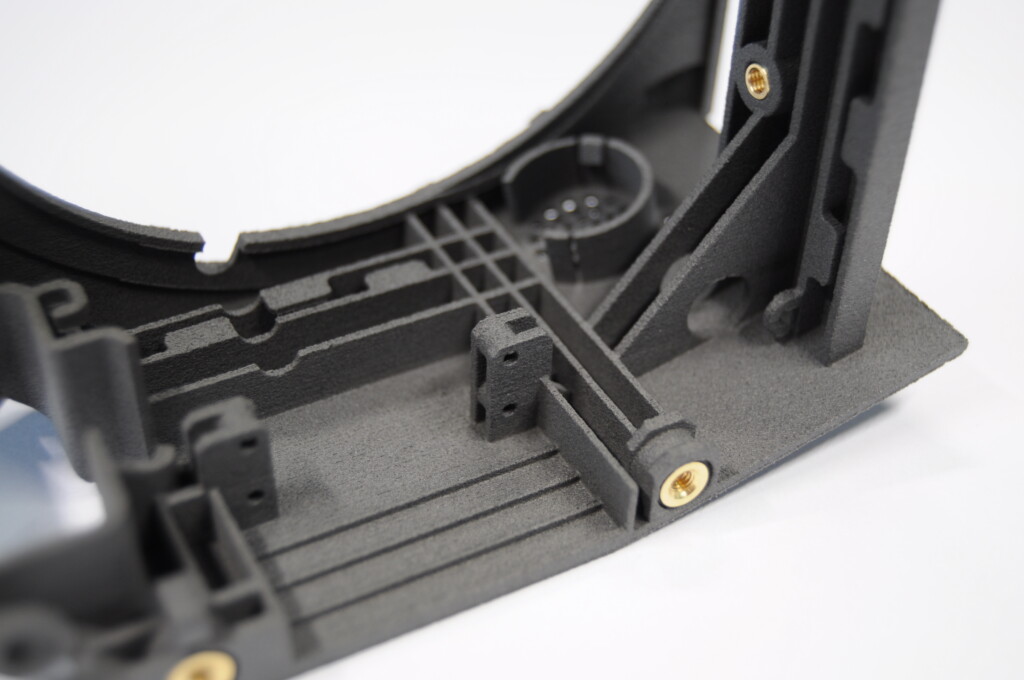
The ARTNOVA example shows that with the right choice of technology, short-run production with good repeatability is possible.
In such cases, 3D printing:
- eliminates the cost of an injection mold,
- makes it possible to produce up to several hundred pieces without investing in tools,
- allows you to respond to design changes without financial loss.
This is especially important for personalized or frequently updated products.
Production of spare parts on demand
Deployments in industrial plants often include production line components that previously had to be ordered with long delivery times.
3D printing makes it possible:
- reducing downtime,
- Elimination of storage of rarely used parts,
- Quickly modify the item for a specific position.
It’s a “digital inventory” model – instead of a warehouse of parts, CAD models are stored digitally.
Components for the production line (handles, jigs, grippers)
The example of a metal gripper for Michelin shows that 3D printing can be a tool for optimizing weight and ergonomics.
In such applications, the benefits are:
- Tool weight reduction,
- Improved strength with less material consumption,
- The possibility of assembling several elements into one part.
Implementations of this type require close cooperation with the engineering department and a series of load tests.
Selection of technology and materials
In cooperation with CADXPERT, technology selection is driven by the application, not the other way around. The analysis includes the part’s operating environment, strength requirements, temperature, contact with chemicals and expected aesthetics.
Nylon PA-12 with SLS technology
It works well in:
- functional utility parts,
- technical enclosures,
- mounting elements,
- short-run production.
It provides good mechanical strength and repeatability. In projects such as ARTNOVA and Optopol, it has made it possible to replace traditional injection-molded parts.
Elastomeric resins (mSLA/LFD)
Used at:
- prototype seals,
- shock absorbing elements,
- functional testing of flexible components.
They make it possible to quickly check the material’s behavior before mass production.
Metals (DMLS/SLM)
Used at:
- industrial tools,
- robotic grippers,
- Structural components requiring high strength.
Implementing metal 3D printing already requires a full load analysis, often FEA simulations, spatial and health and safety capabilities, and organized post-print processing and quality control.
Work organization and training
Technology by itself does not guarantee success. Three organizational elements increase the chances of successful implementation:
Designation of the process owner
One person or team should be responsible for:
- acceptance of applications,
- project verification,
- 3D printing schedule,
- print quality.
Standardization of workflow
The following scheme works:
submission → analysis → design/DfAM → approval → printing → quality control → model archiving.
This makes it possible to build an internal base of approved components.
Technical and design training
DfAM knowledge makes the biggest difference.
Training includes:
- AM design principles,
- Selection of orientation and parameters,
- quality control,
- maintenance of equipment.
Deployments in which the team has received hands-on training on plant parts achieve operational stability faster.
Piloting and first projects
Piloting is the stage when technology ceases to be a promise and begins to be a measurable tool.
In CADXPERT, the pilot includes:
- A selection of 3-5 viable applications,
- execution of the first series,
- tests under production conditions,
- Measuring lead times and costs,
- part durability analysis.
This is the moment when 3D printing is compared with the existing manufacturing method, by the numbers.
Successful piloting follows:
- Standardization of parameters,
- Determination of implementation SLA,
- Integration of the technology into the permanent production process,
- Building a “digital warehouse” of approved models.
The most important practical observation from CADXPERT implementations
The most effective deployments start with a specific operational problem, not a desire for a printer.
Companies that take a design and process approach – with analysis, piloting and measurable KPIs – achieve cost savings and sustainable integration of 3D printing into production.
Case Studies – real examples of implementation in production
Low-volume production of bicycle components – ARTNOVA
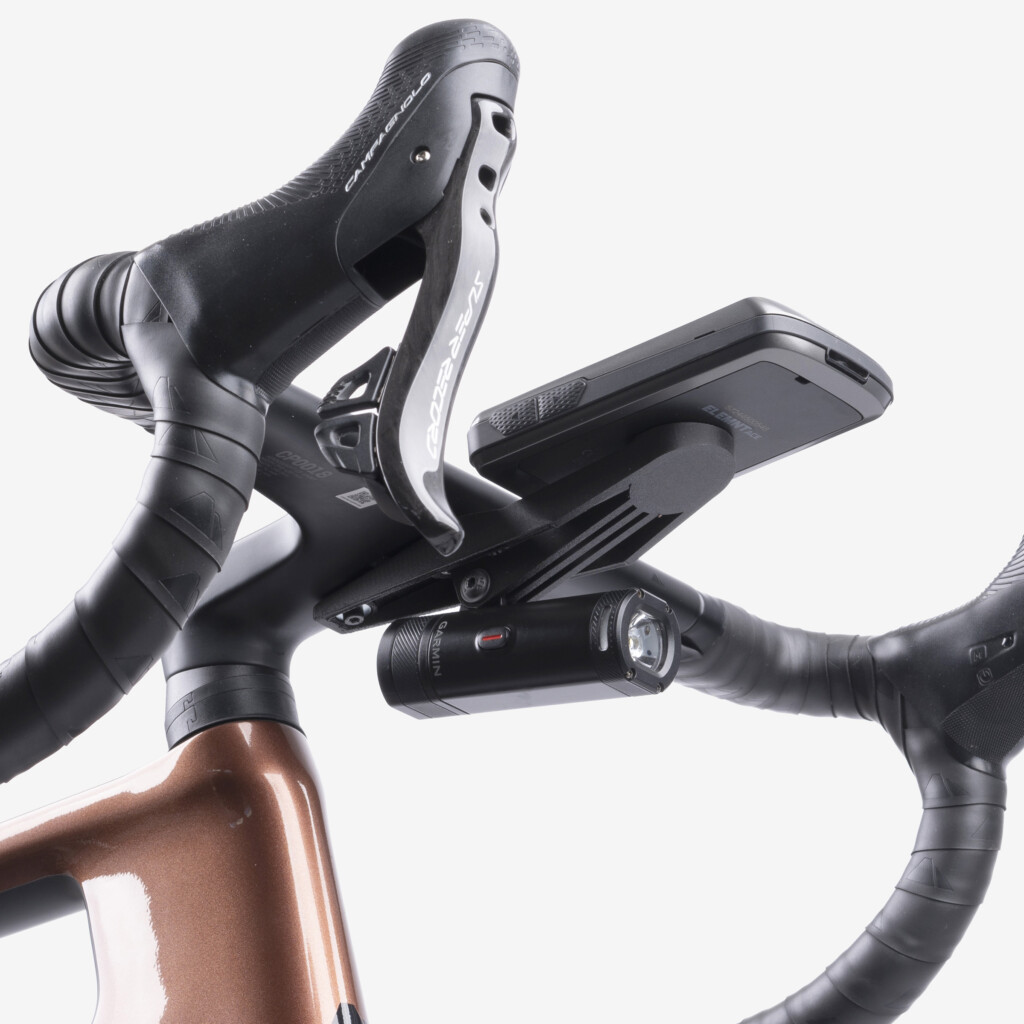
The company deployed the Formlabs Fuse ecosystem and 3D scanner, allowing it to produce more than 200 models of nylon parts with quality comparable to injection-molded products. After implementation, part preparation time was reduced from weeks to days, and low-volume production became cost-effective due to the repeatability and speed of 3D printing.
Faster prototyping of masked components – NanoSphere
As we mentioned earlier, with Formlabs Form 4, NanoSphere gained the ability to test and modify designs internally, eliminating delays and errors caused by outsourcing prototypes. Research and development cycle time has been significantly reduced.
Lightweight robotic gripper for Michelin
Michelin engineers working with CADXPERT have designed and printed a metal gripper for a robot. This is an example of using 3D printing metal technology to produce functional industrial tools with optimized weight and strength.
Complex geometries and prototype iterations – Optopol Technology
The diagnostic equipment manufacturer has implemented SLS 3D printing, gaining the ability to create thin-walled prototypes and component series. Design freedom for R&D increased and design iterations were accelerated.
Production of assembly slots for cosmetics – MB Cosmetics
A batch of eight precision assembly components for a cosmetics manufacturer was made in a matter of days, allowing 25,000 final components (welded tubes) to be delivered on time. This is an example of how 3D printing can negate production downtime and ensure on-time delivery.
Ergonomics and workplace safety – PepsiCo
The company has increased efficiency and safety at work with the UltiMaker S7 Pro Bundle 3D printer, optimizing tools and fixtures at its production facility in Swietem.
6Faster delivery of electrical components – Euroloop
A startup making components for electric chargers has used 3D printing to produce parts with ESD properties. 3D printing introduced independence from subcontractors, and the company won an Elon Musk award.
The most common mistakes when implementing 3D printing and how to avoid them
In our experience of implementations, the biggest problems arise not at the technology level, but at the organizational decisions made at the beginning of the project. 3D printing is an engineering tool. If it is implemented without a clearly defined business and process goal, it quickly ceases to be used to its full potential. In practice, most difficulties can be anticipated and eliminated even before the equipment is purchased.
Unreliable needs analysis before purchasing equipment
One of the most common mistakes is to start the implementation with the selection of a printer, instead of analyzing the applications in the plant. In many companies, the purchasing decision is made based on the device’s catalog parameters or the vendor’s recommendation, without first checking whether the technology will actually solve specific production problems.
In practice, this means that once the device is installed, the team only begins to think about what to use it for. As a result, the printer ends up in R&D or the tool room and is used sporadically, usually for simple prototypes that don’t justify the investment.
In projects implemented by CADXPERT, implementation analysis includes:
- identification of items that today are made long or expensive,
- Analysis of production downtime due to parts shortages,
- assessing the feasibility of transferring some toolmaking to 3D printing,
- Verification of mechanical and environmental requirements for potential applications.
This approach allows you to create a list of first applications even before you buy the device. This ensures that the printer works on real projects from day one, rather than experiments.
Choice of technology mismatched with material requirements
The second common mistake is to choose a technology based solely on the price of the device or its popularity in the market. Meanwhile, each 3D printing technology has different mechanical properties, dimensional accuracy and material limitations.
In practice, this means that a part printed with the wrong technology can:
- not withstand mechanical loads,
- deform under the influence of temperature,
- do not meet the tolerances required for installation,
- wear out faster than a component made using a traditional method.
Therefore, in the CADXPERT consulting process, the technology is always matched to the application.
The selection of technology is usually preceded by a production test – printing a few real parts and checking them under working conditions.
No clear training strategy for users
3D printing is sometimes perceived as a “plug & play” technology that does not require high technical competence. In reality, effective use of additive technology requires knowledge of design, materials science and production preparation.
Typical problems arise in companies that do not invest in training:
- models are designed as for CNC machining, not 3D printing,
- Operators change parameters without fully understanding their impact,
- There is a lack of print quality control and repeatability of the process.
Therefore, in CADXPERT implementation projects, our capabilities include not only the provision of equipment, but also:
- DfAM (Design for Additive Manufacturing) – design for 3D printing,
- Optimization of orientation and printing parameters in specific cases,
- Managing a library of models and part versions – 3D Printing Online Platform.
Companies that treat training as an integral part of implementation move from experimentation to stable production much more quickly.
Underestimation of total maintenance and operating costs
The cost of purchasing a printer is only one component of the total cost of implementation. In many cases, companies focus solely on the price of the device, overlooking operating costs (higher in technologies such as SLM – metal 3D printing).
The total cost of the technology includes:
- consumables,
- service and maintenance of equipment,
- Operators’ and engineers’ working time,
- Post-processing (cleaning, curing, surface treatment),
- software and file management.
The lack of realistic calculation sometimes leads to disappointment with costs, even though the technology itself works well.
In our practice, TCO (Total Cost of Ownership) analysis is performed even before implementation. It includes a comparison of the cost of manufacturing parts using additive technology with their manufacture using traditional methods, taking into account not only the unit cost, but also lead time, production downtime or parts storage costs.
FAQ – implementing 3D printing in a manufacturing plant
The best start is to choose 3-5 specific applications with low risk and quick business impact, such as assembly tooling or UR support parts. Don’t start with a “3D printing strategy,” just one real manufacturing problem. It’s worth appointing a process owner who collects requests and prioritizes them. The first projects should have clearly defined KPIs: lead time, cost, downtime reduction. A practical tip: do a 6-8 week pilot and summarize it with numbers. This builds production confidence.
The most common parts are jigs, fixtures, mounting brackets, control instruments and maintenance aids. These parts are low-volume, often modified and costly to make traditionally. 3D printing reduces delivery time from weeks to days, which has real operational value. The return comes not only from the cost of the part, but from the reduction in downtime and tool room time. A practical tip: count the cost of an hour of line downtime – often one avoided breakdown pays off half a printer.
No – in many plants, most of the prints are production parts to support the process, not prototypes of final products. Prototyping is a good input because it shortens design iterations. However, the real value comes with usable parts: covers, spacers, guides or fixtures. Material selection and correct part design under AM are key.
The selection should be based on the applications, and only in further analysis take into account the catalog parameters of the device. If jigs and fixtures predominate, industrial FDM with engineered materials will often suffice. If small precision parts are needed, resin technologies are worth considering. For short-run production of functional parts, repeatability and process control are important. A practical tip: before you buy a machine, print 10 real parts from a supplier and evaluate them on the production floor.
ROI should be calculated more broadly than the cost of a single print. The calculation should include lead time, cost of downtime, builder and tool room time, and the cost of stocking parts. Often, the biggest savings is the lead time reduction, not the material price. It is worth comparing the total cost of making 10-20 typical parts using traditional and additive methods. Practical tip: prepare a comparison sheet for real cases from the last 12 months.
Repeatability depends on stable printing parameters, material control and a constant working environment. It is necessary to establish standard production profiles and limit their arbitrary modification. It is also important to control model orientation and postprocessing. In industrial plants, documentation of batches and parameters for critical components is proven. A practical tip: validate a “frozen” production profile for usable parts and don’t allow operators to experiment with process parts.
Yes, provided that the material is properly selected and the anisotropy of printing is taken into account. Mechanical properties depend on orientation, filling and process parameters. Structural parts require load testing before release. In many applications, 3D printing replaces aluminum or steel in auxiliary tooling. Practical tip: perform a destructive test on the first batch of parts and determine the safety reserve.
It does not work well for large production runs, where the injection mold depreciates quickly. Very tight tolerances without post-processing can be a problem. Operating temperature and chemical environment can also be a limitation. In some industries, material and process certification is a barrier. Practical tip: if you need thousands of identical pieces per month, consider AM only as an interim step.
A formal request channel, such as a form or ticket system, works best. Each request should include the application, strength requirements and deadline. It is worth keeping a record of the parts made and their costs. This allows you to build a knowledge base and analyze efficiency. A practical tip: without a formal process, a printer quickly becomes a “toy for small requests.”
Most often the responsibility is between the construction and maintenance departments. Designating a single operational owner is key. Lack of clear responsibility leads to chaos and lack of standardization. In larger plants, it is worth appointing an interdisciplinary AM team. Practical tip: responsibility should extend not only to printing, but to the entire life cycle of the part.
After piloting, repetitive applications should be identified and a library of approved models should be created. Each part should have a specific version, material and print profile. It is worth establishing an SLA for internal implementation. Standardization reduces errors and shortens implementation time. Practical tip: don’t scale implementation without clear quality procedures.
A designer familiar with DfAM principles, a technology operator and a quality person are needed. Design competence is sometimes more important than the printer operation itself. Implementations often fail due to a lack of design knowledge under AM. It is worth investing in hands-on training. Practical tip: carry out your first projects together with an experienced technology partner.
Cost is not just material, but people’s time and equipment maintenance. It is worth monitoring the cost per hour of printer operation and the cost of material per detail. Regular maintenance reduces unplanned downtime. Analyzing equipment utilization shows whether the investment is optimal. Practical tip: report monthly cost vs. savings – it keeps the project alive.
Models should be stored in a PDM/PLM system with version control. Printing an “old” version can generate operational risks. It is a good idea to label parts with a revision number physically as well (labeling capability in PreForm software helps, for example). A library of approved models reduces the lead time for subsequent orders. Practical tip: set a rule – we only print from an approved repository.
It is crucial to continuously build an application pipeline. One should proactively collect problems from production and analyze whether AM can solve them. It is worth promoting implementation successes internally. Regular utilization reviews help correct the course of action. A practical tip: if there are no new projects for 30 days – it’s a signal that the process needs to be revived.
Summary
Implementing 3D printing in a manufacturing plant has the greatest effect when it takes off from a specific problem: an outage, a queue in the tool room or a design iteration that is too slow.
In our practice, 3D printing pays off fastest in the areas of prototyping, tooling (jigs, fixtures, assembly sockets) and on-demand part production – where time and flexibility matter.
Implementations with CADXPERT include sound application analysis, proper selection of technology and materials, process organization (owner, workflow, model library) and piloting with KPIs.
Case studies, which you can read about on our site, show that 3D printing can shorten development cycles, reduce tooling costs and realistically secure production deadlines. This gives companies more independence from subcontractors and allows them to react faster to changes.
Contact 3D printing consultants
Want to learn how 3D printing can support your manufacturing facility? Our consultants will analyze your needs, select the right technology and help with every step of implementation. Contact our team today!
Ask us about the ROI of 3D printing.
Submit the form, our consultant will contact you within 15 minutes