SPICA – 3D printing in a Porsche 911 restomod
See how we worked in the Spica project
SPICA project
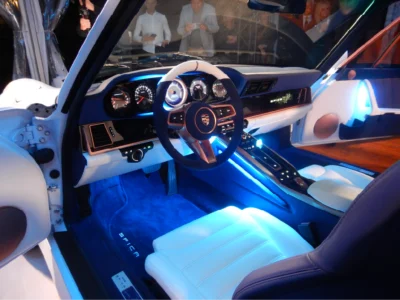
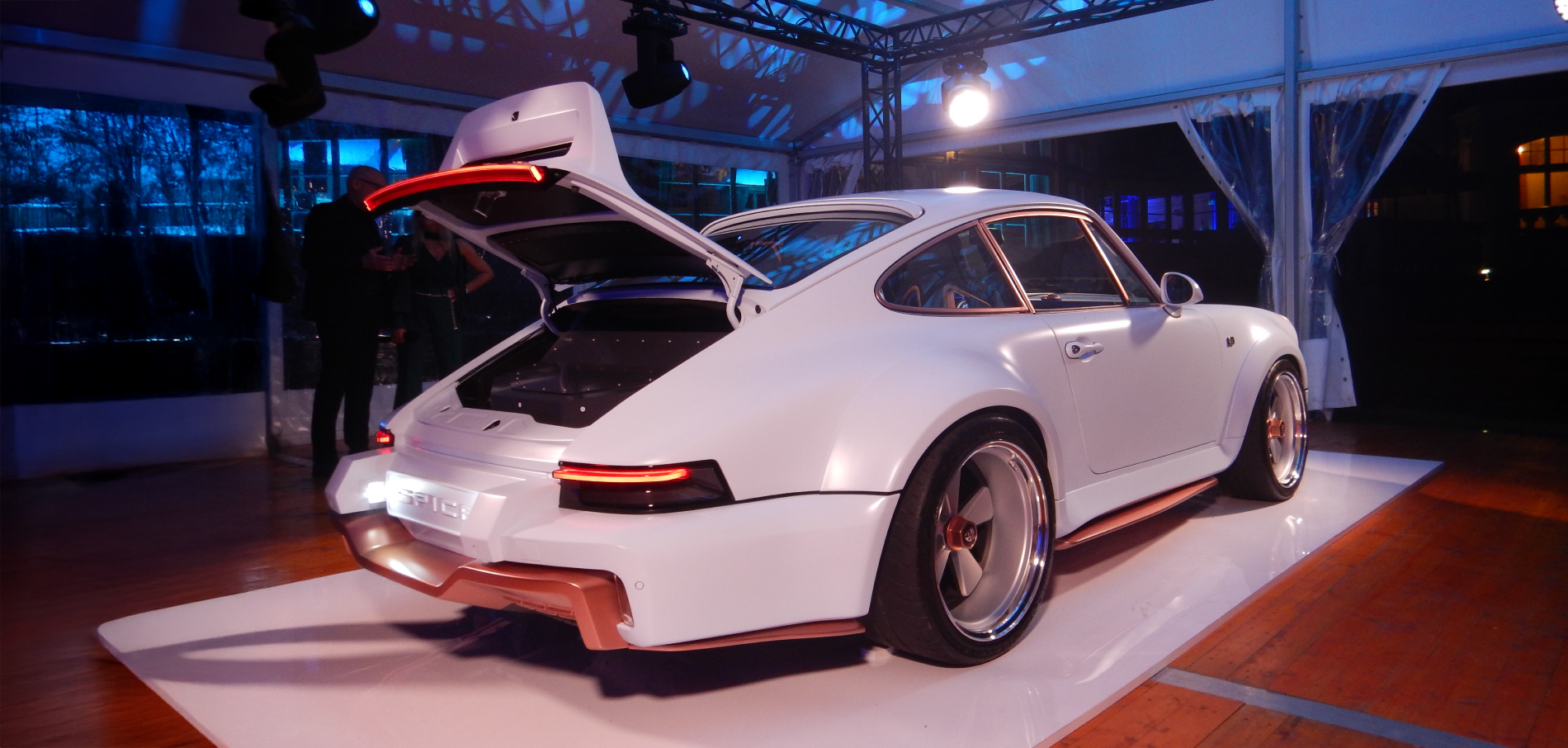
The SPICA design team was established in Kalisz, Poland, in 2024.The task of the design and engineering team was to create a restomod of the Porsche 911.CADXPERT’s role was to provide scanning capabilities, design capabilities and 3D printing of the parts itself in various technologies.

Scanning
How did we work?
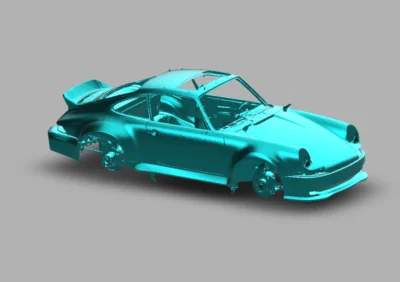
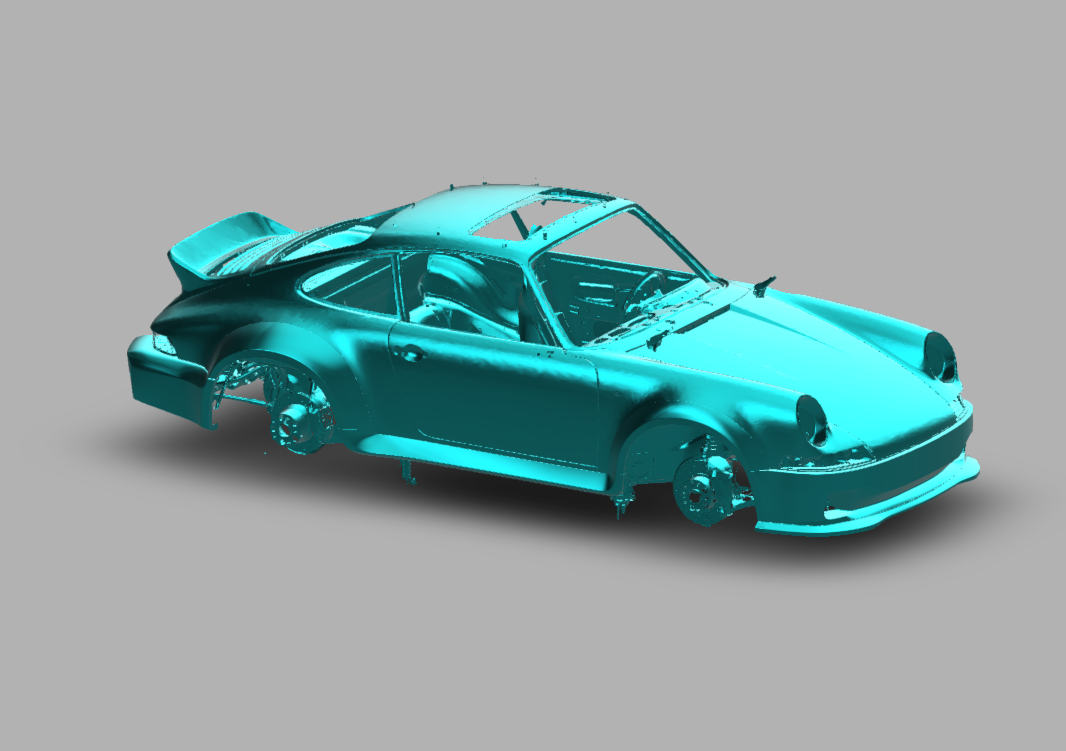
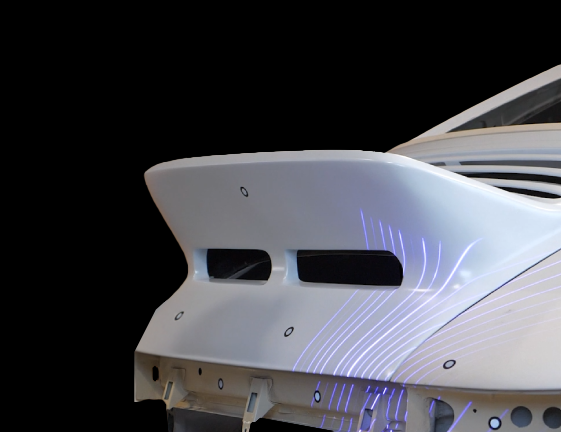
On the SPICA project, for the larger body and trim details, we worked mostly on finished scans provided by the designers. We scanned some parts ourselves using Shining 3D equipment.
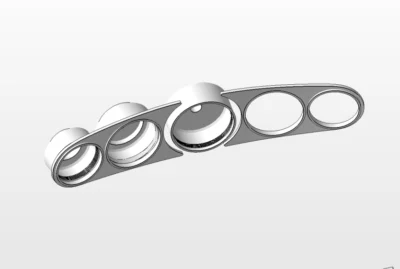
Our scanning work went on sent parts of smaller dimensions such as air vents, gear knob, and clocks.

How do 3D scanners help with autotuning?
Professional 3D scanners, such as devices from the Shining 3D series, streamline the entire creation process in auto-tuning. They make it possible to quickly and accurately digitize bodywork, interior components and mechanical assemblies with accuracy down to tenths of a millimeter.
As a result, after the reverse engineering process, tuners receive a precise CAD model of the vehicle’s parts, which can be directly used in the design of new components. This includes custom aerodynamic components, dedicated mounts or upgraded suspension parts.
The scanners also allow quality control after modifications are made by comparing the as-built scan with a reference model.
Design
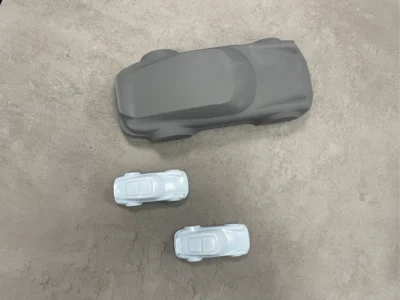
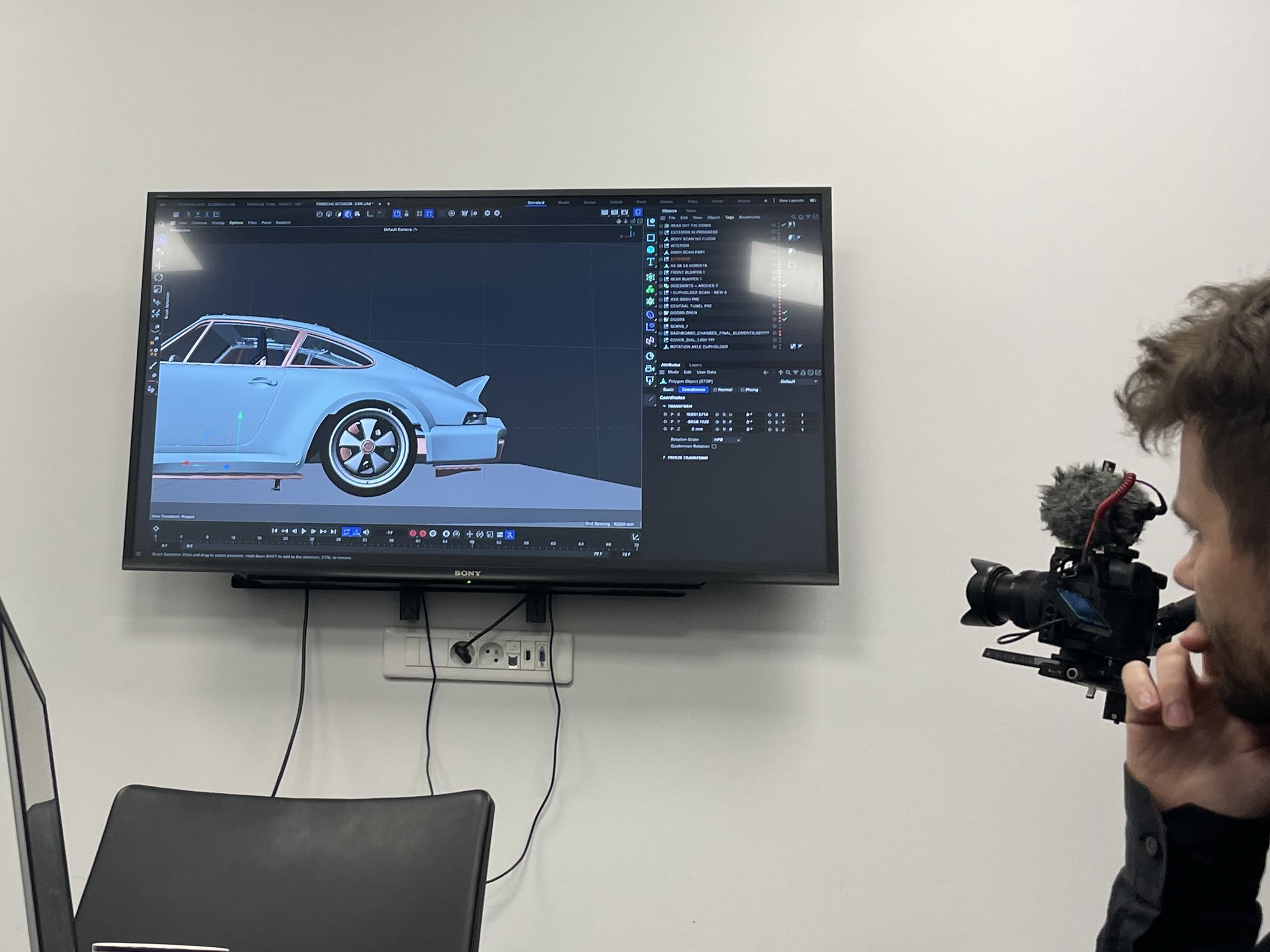
On the CADXPERT side, the designers were in charge of creating CAD surface models based on conceptual models provided by chief designer Frederick Zyska, an external design batch created in Cinema 4D.
Technology
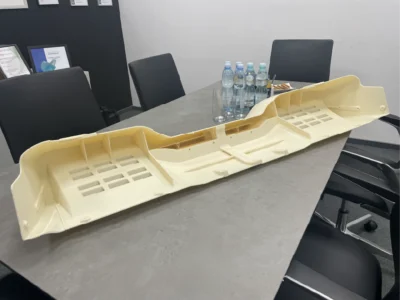
Our work was done in Fusion 360 software on a free-form (T-splain), often using generative design. In the case of the center tunnel mounting structure, we connected the existing mounting points on the 3D scan and marked them using just this method – automatically.
By designing with us, you get the opportunity to live cooperation with each person from the team. We consulted some elements live with the upholsterer to determine the correctness of the edges or the creation of the recess needed to wrap the leather. We send the project for review and mobile and desktop support at joint conferences – the design program coordinates the display. In this way, the client has a direct view of the progress at each stage of the work, and the team discussion develops based on the specific material and control.

Our work
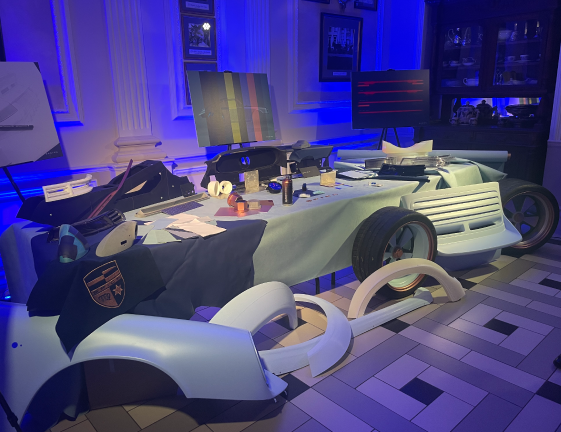
Our design took into account manufacturing technology, material and assembly in advance. We marked ready assembly points like holes, pins, threads, plates or nuts. We created closed solid models of a certain thickness with connecting elements such as bolted, glued and snap joints. We also developed a number of invisible structures (e.g., from aluminum profiles).
During the work, the client and the chief designer supported with factual assistance to better combine the reality of the 3D scan with the designer’s vision. The designs went to various manufacturing technologies like 3D printing, laser cutting, CNC machining.
3D Printing
CADXPERT’s machine park allows 3D printing in large-format FDM (filament), SLA, PolyJet (resin) and SLS and SAF (powder) technologies. For the SPICA project, we used our capabilities extensively – matching the manufacturing method to the design of the part, and sometimes doing the opposite.
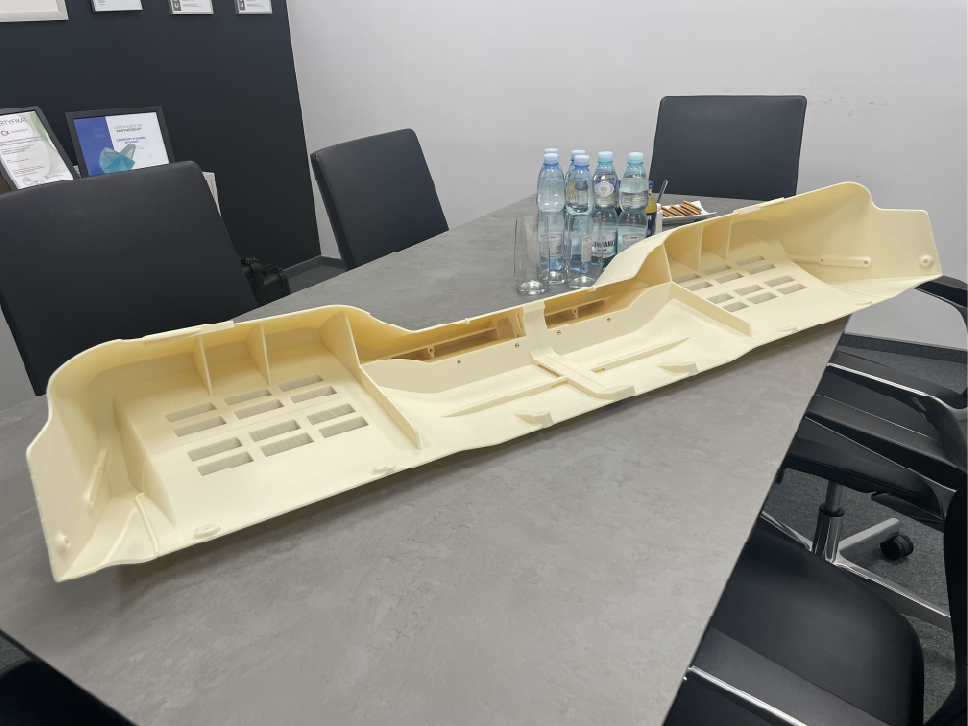
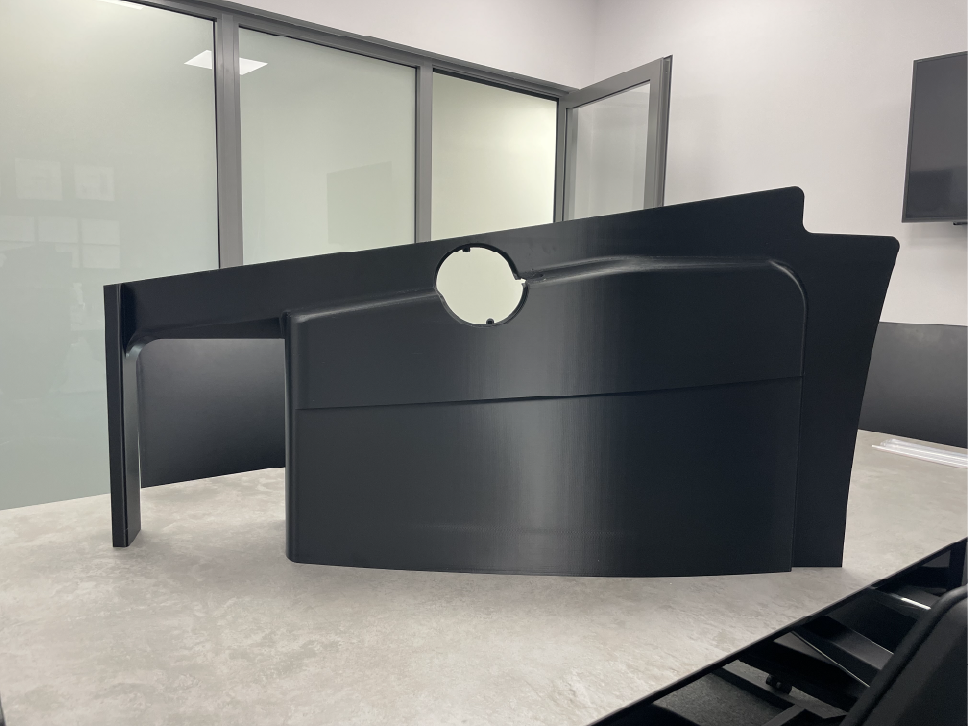
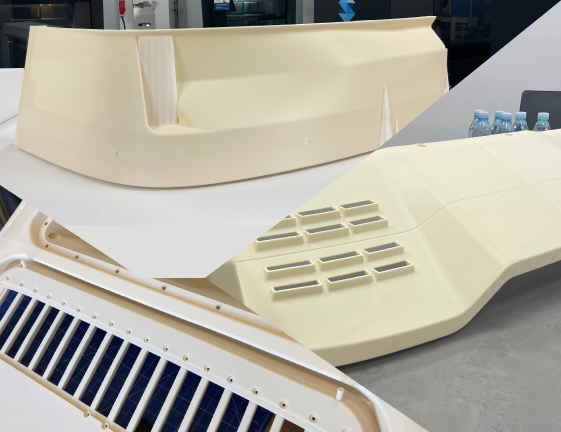
Industrial FDM – large-format body parts
FDM technology was used to create SPICA’s largest components, requiring high strength, dimensional stability and machinability.
Why FDM?
- The ability to print high-volume parts without dividing them into too many segments,
- High temperature and UV resistance (ASA),
- ease of fitting and subsequent processing before painting.
Materials: ASA and ABS-M30.
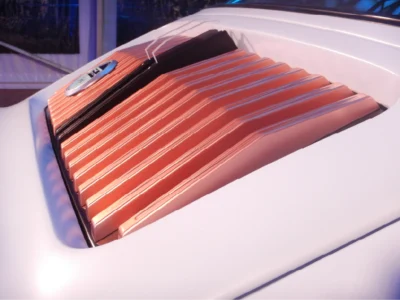
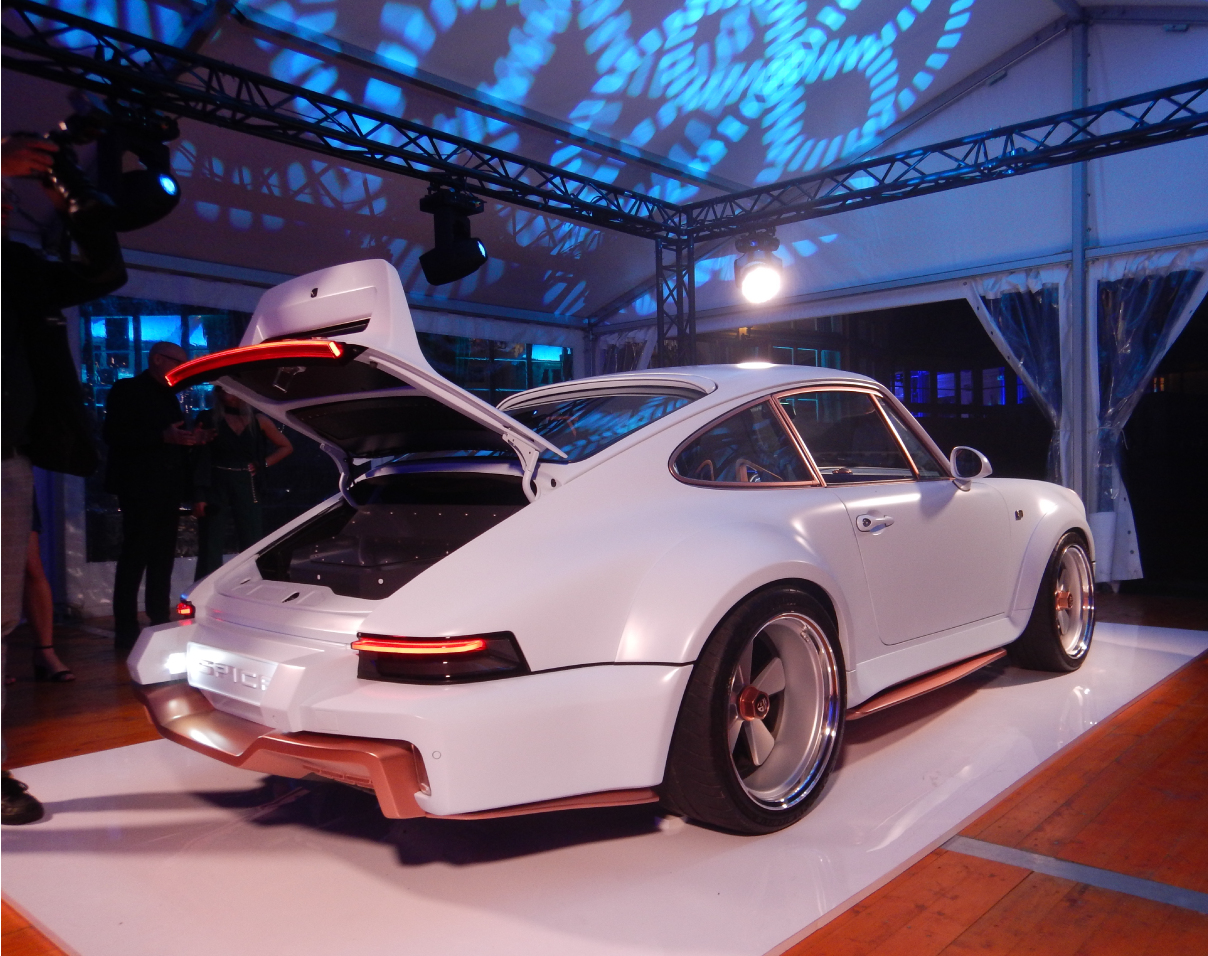
Applications: bumpers (front and rear), tailgate with diffuser and ribs, sills and moldings, wheel arches
SLS / SAF – structural, precision and lightweight components
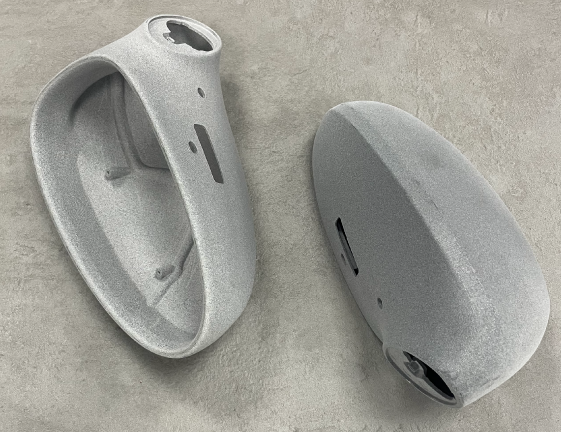
Powder technologies have made it possible to create resistant, yet lightweight and geometrically complex parts that could not be made by cavity methods.
Why SLS/SAF?
- High durability and fatigue resistance,
- perfect fit,
- The ability to create thin-walled yet rigid parts.
Material: PA-12.
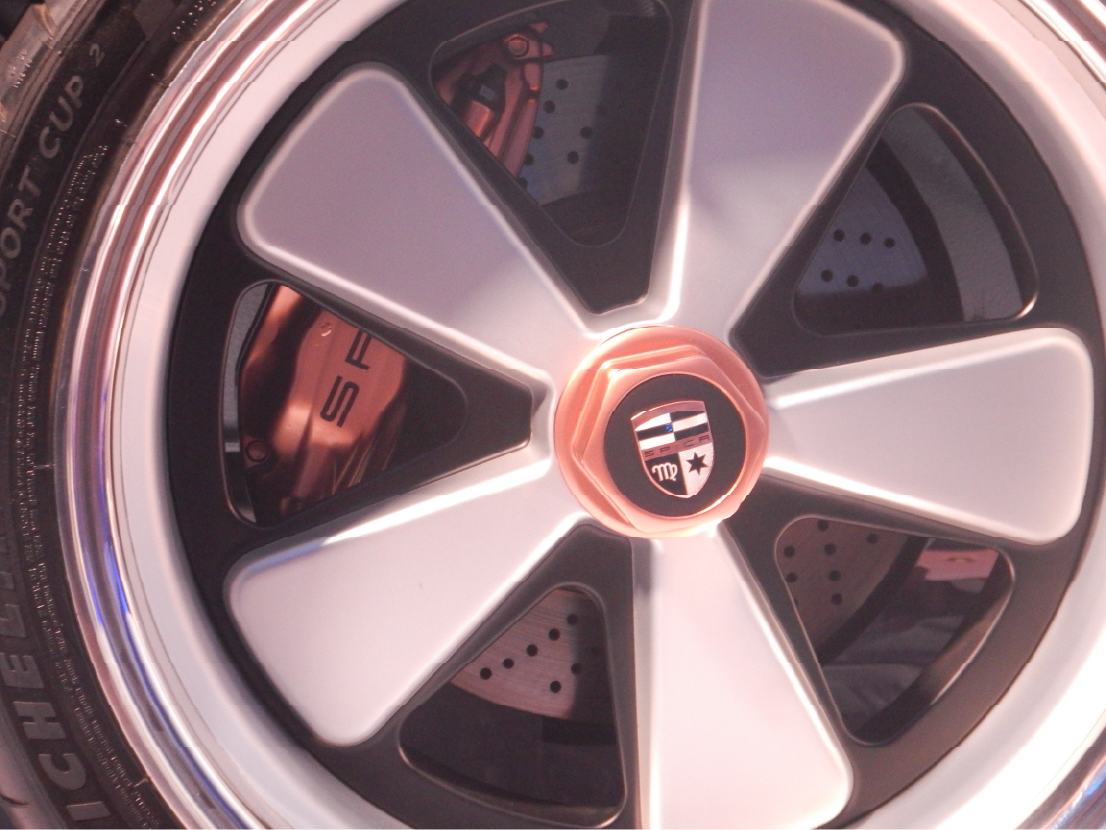
Applications: lamp bodies, mounting components, wheel covers and details, parts of internal mounting structures
PolyJet – decorative and visual elements
PolyJet was indispensable where aesthetics and multimaterials were a priority.
Why PolyJet?
- The highest resolution among the technologies used,
- The possibility of combining colors and materials,
- Aesthetic surface without additional processing.
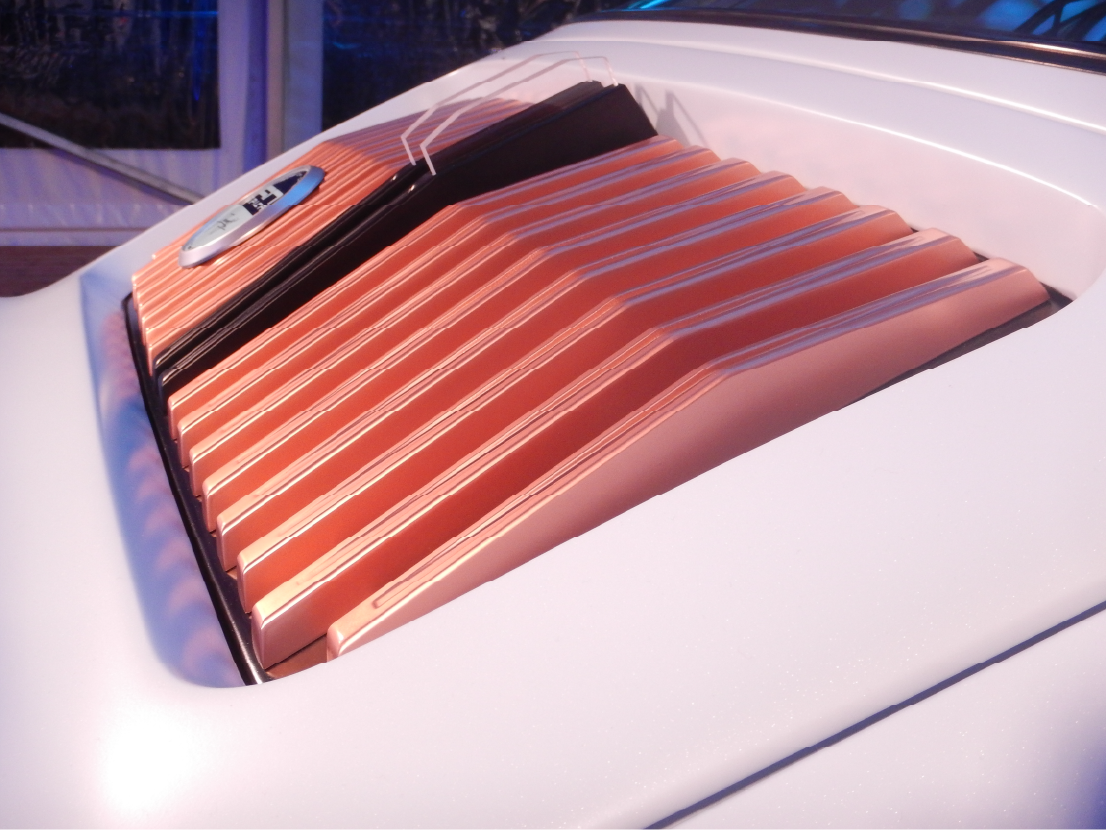
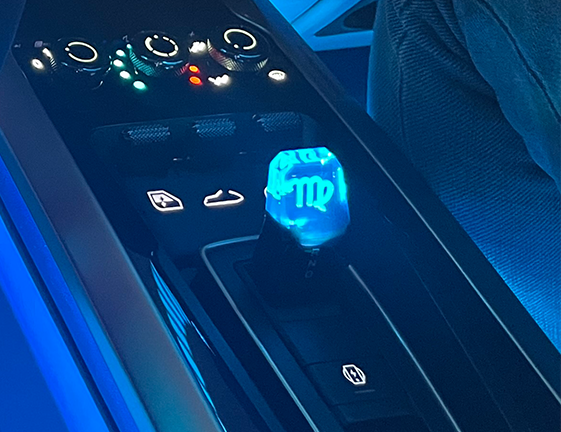
Applications: Car key (multi-color print), gear shift knob, visual details requiring a smooth surface or transparency
SLA – details requiring high smoothness and precise edges
SLA technology was a complement for small parts, where detail, sharp edges and high surface quality were key.
Why SLA?
- exceptionally smooth surface,
- high dimensional accuracy,
- Ideal for small and intricate details.
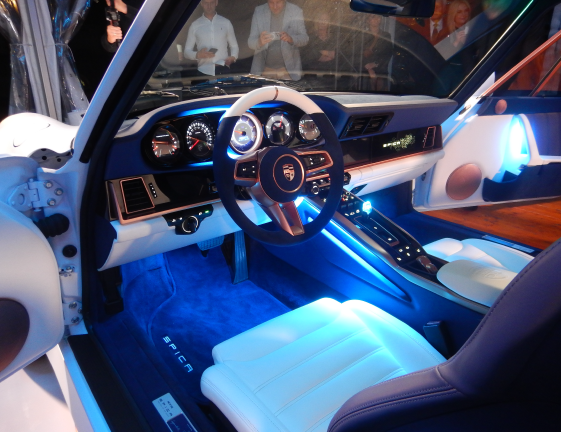
Applications: precision interior components, air vents, prototype fitting.
Assembly and finishing
Fitting
The final phase of the project is assembly. In a unitary project like SPICA, parts come in individual pieces, making it easier for us to customize and fit them. By designing as a team and using the best manufacturing technologies, including 3D printing on Stratasys printers, we were able to create parts that fit without collisions.
All potential problematic issues were caught at the design stage, including the order of assembly. The final stage went smoothly. See its effects – the finished, realized project!

Word from our specialists
“What mattered to me was the uniqueness of the challenge. The SPICA is a one-of-a-kind car, created specifically to order and providing a huge scope for additive manufacturing technologies.”
Bartłomiej Gaczorek
“Working with Mr. Frederick Zyska and the team from Kalisz was very smooth thanks to the right software and everyone’s willingness to work together. We performed the entire SPICA project at a world-class level – this is my reason to be proud.”
Karina Guzdek
SPICA and our capabilities
The SPICA project is a great example of our auto-tuning work capabilities. We have a design team, scanners and 3D printers in various technologies at your disposal. Ask our consultants about opportunities to collaborate on projects similar to SPICA!
Do you have your own autotuning project?
Submit the form, we will help you implement it.